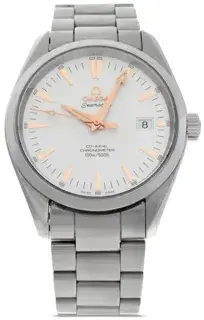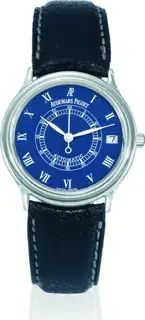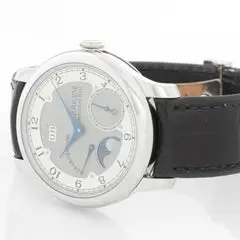
The tourbillon was patented in 1801 to solve a problem that no longer exists, which is why it remains the most misunderstood mechanism in watchmaking. Our auction database holds confirmed tourbillon results reaching HK$32,965,000, and the spread between them explains something more interesting than the mechanism itself: what the market actually pays for when it buys a rotating escapement. This article covers the physics, the variants, and the evidence.
The original problem, and why it was real
Abraham-Louis Breguet's 1801 patent addressed a specific defect in pocket watches. A balance wheel and its hairspring are subject to gravity, and a hairspring hanging in one orientation coils and uncoils slightly differently than in another. A pocket watch spends most of its life in one position, vertical in a waistcoat, so any positional error becomes a permanent, cumulative rate error.
Breguet's solution was to mount the entire escapement, balance, hairspring, escape wheel and pallet fork, in a rotating carriage. As the carriage revolves, typically once per minute, the escapement passes through every vertical position in turn, so positional errors average out rather than accumulate.
Two things follow that are rarely stated plainly. First, the tourbillon corrects vertical positional error only; in a flat, dial-up position it does nothing, because rotation in the horizontal plane does not change the hairspring's relationship to gravity. Second, a wristwatch is constantly moving through orientations anyway, which already averages positional error. In a wristwatch the tourbillon is largely a solution without a problem.
That is not an argument against it. It is the necessary context for understanding what buyers are paying for, which is execution rather than accuracy.
What makes one genuinely difficult to build
The engineering challenge is mass and energy. The carriage must be light enough that driving it does not consume the power the escapement needs, and balanced precisely enough that its own rotation introduces no new error. A cage weighing a fraction of a gram must be assembled from dozens of parts, poised so accurately that no orientation of the cage itself biases the rate.
This is why tourbillon pricing correlates with finishing rather than function. The mechanism is a demonstration of a manufacture's ability to make and poise very small, very light components, the horological equivalent of a technical exercise performed in public.
The variants, and what each actually changes
- One-minute tourbillon. The standard: one rotation per minute, letting the carriage double as a running-seconds indicator.
- Flying tourbillon. The upper bridge is removed, cantilevering the cage from below. This is harder, the cage is supported at one end only, and purely a visual gain.
- Multi-axis tourbillon. Two or three nested carriages rotating on different axes, so the escapement traverses orientations a single axis cannot reach. Theoretically more complete averaging; practically, a display of manufacturing capability.
- Tourbillon with remontoir d'égalité. The most functionally serious combination. A remontoir is a secondary constant-force device, a small spring or weight rewound at fixed intervals, that delivers identical torque to the escapement regardless of mainspring state. This addresses a real accuracy problem: a mainspring's torque falls as it unwinds. Our auction data contains an F.P. Journe Tourbillon à Remontoire d'Égalité that sold for CHF 7,320,000.
- Karrusel. Bahne Bonniksen's 1892 alternative, driven through the third wheel rather than by the escapement train, rotating far more slowly. Cheaper to make historically, and now vanishingly rare.
The remontoir case is the one worth dwelling on, because it inverts the usual criticism. A tourbillon alone chases a problem a wristwatch mostly solves by being worn. A remontoir addresses torque variation, which affects every mechanical watch in every position. Combining them is one of the few configurations where the accuracy argument genuinely holds.
What the market pays: confirmed auction results
All figures below are realized prices including buyer's premium, as reported by the auction house, in the sale's original currency.
| Watch | Estimate | Realized |
|---|---|---|
| F.P. Journe Tourbillon Souverain | not published | HK$32,965,000 |
| Patek Philippe 5002P-001 Sky Moon Tourbillon | HK$9,000,000 to 16,000,000 | HK$14,970,000 |
| F.P. Journe Ref. T Tourbillon Souverain | HK$2,400,000 to 4,800,000 | HK$11,239,500 |
| F.P. Journe Tourbillon à Remontoire d'Égalité | not published | CHF 7,320,000 |
| Richard Mille RM59-01 | HK$2,350,000 to 4,700,000 | HK$5,080,000 |
| F.P. Journe tourbillon | $600,000 to 1,200,000 | $4,355,000 |
| Richard Mille RM25-01 | HK$2,000,000 to 4,000,000 | HK$3,810,000 |
| Patek Philippe 6002G-010 | CHF 2,000,000 to 4,000,000 | CHF 3,242,000 |
| Audemars Piguet 26534TI | HK$1,200,000 to 2,400,000 | HK$2,413,000 |
Three conclusions the data supports
Independent makers outperform the great houses. The single highest tourbillon result in our data is not Patek Philippe. Across our full auction dataset F.P. Journe averages $762,120 per lot against Patek Philippe's $226,137, a manufacture producing a few hundred watches a year commanding more than three times the per-lot average of the most storied name in watchmaking. Scarcity plus a coherent technical identity beats brand heritage at this level.
Estimates systematically understate tourbillon demand. The Journe Ref. T carried a HK$2.4M to 4.8M estimate and realized HK$11,239,500, 134 percent above the high estimate. The $600,000 to $1,200,000 Journe realized $4,355,000, 263 percent above. When specialists with full access to comparable sales miss by that margin repeatedly, it indicates a market where supply is thin enough that two determined bidders set the price.
The functionally serious combination is priced accordingly. The remontoir d'égalité tourbillon at CHF 7,320,000 sits among the highest results in the set. Whether that reflects the mechanism or the maker is impossible to separate, but it is at least consistent with the mechanical argument.
How to think about buying one
Do not buy a tourbillon for accuracy. A modern chronometer-certified movement with a free-sprung balance and a silicon hairspring will outperform most tourbillons on the wrist, at a fraction of the cost, because it addresses the errors that actually affect a watch that moves.
Buy one as a finishing and manufacturing statement, and judge it on that basis: cage weight and poising, bridge finishing, whether the tourbillon is genuinely integrated into the movement's architecture or added as a module. Our data suggests the market rewards exactly this, coherent independent execution above institutional prestige.
Realized tourbillon prices are on our auction results page, and current listings on our tourbillon listings page. Technical documentation is published by F.P. Journe, Patek Philippe and Richard Mille.
Methodology
Auction figures are realized prices including buyer's premium as reported by the auction house, shown in the sale's original currency without conversion, since converting historical results at today's rates would misrepresent them. Per-lot brand averages are calculated across our full auction dataset in USD-denominated sales only. Full approach on our methodology page.