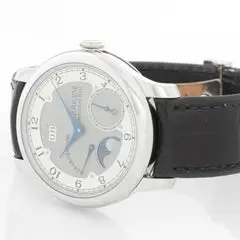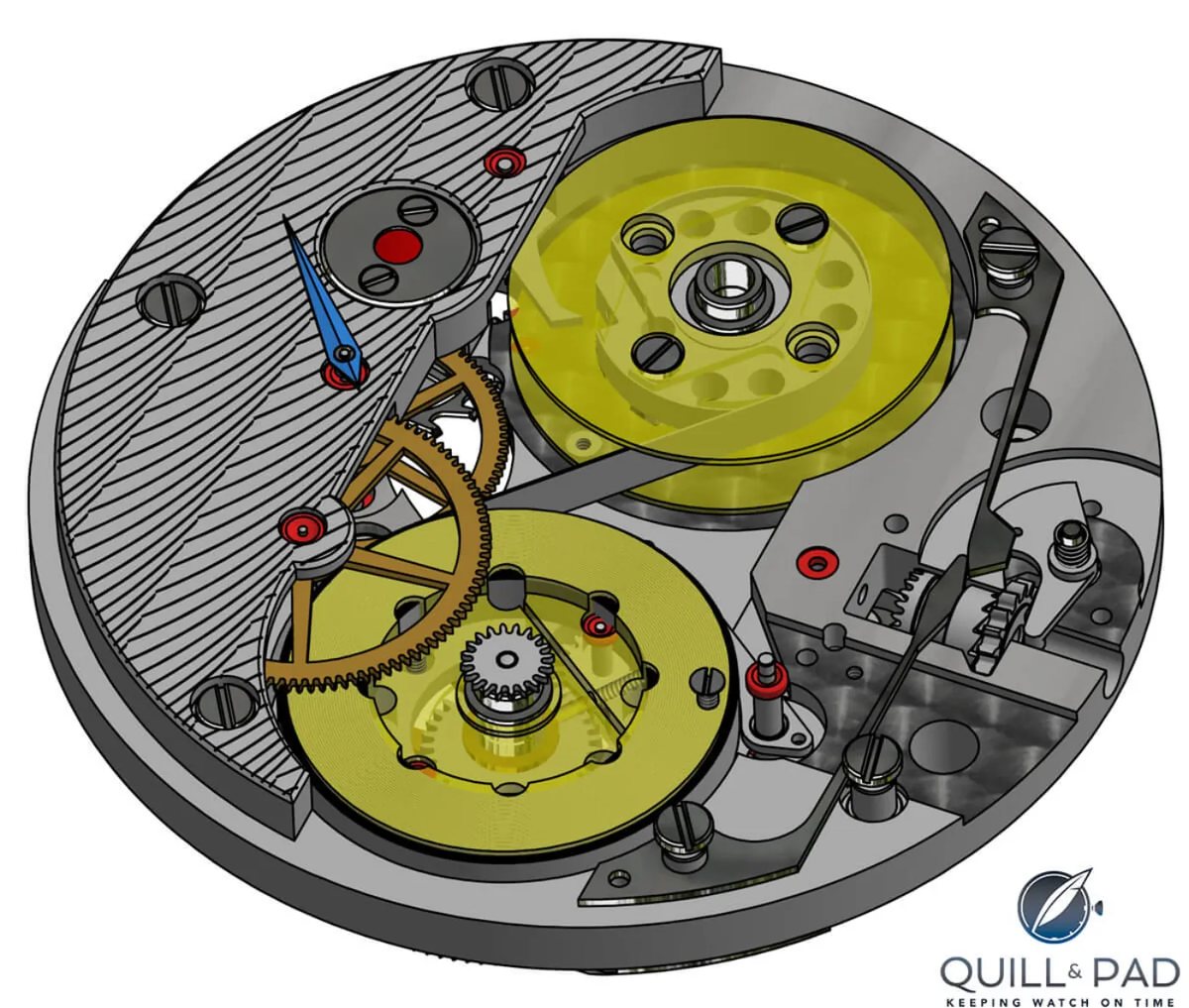
A mainspring is a battery, but a deeply non-linear one. Wound tight, it delivers a torrent of torque the escapement has to throttle. Almost flat, it slumps to a trickle that barely keeps the balance wheel oscillating. Between those extremes sits the entire problem of precision watchmaking. The Tensator system, named after the British company that commercialised the flat constant-force spring in the 1950s, is one of the cleanest engineering answers to that problem. Until 2016 no one had ever fitted a true Tensator inside a wristwatch. Then a two-man workshop in Buchs called Oscillon did exactly that.
The Torque Problem
A conventional helical or spiral mainspring stores energy by being wound against itself. Its output torque is not flat. It falls off in a roughly exponential curve as the spring unwinds. The first hour after a full wind, a typical movement delivers perhaps 25 to 40 percent more torque to the going train than it does in the last hour before the power reserve runs out. The escapement sees that change as a varying impulse, the balance wheel sees it as a varying amplitude, and the rate of the watch drifts accordingly.
For wristwatches the effect is small but measurable. For marine chronometers, where a single second per day across an Atlantic crossing decided longitude, it was unacceptable. The history of horology is in many ways the history of inventions designed to flatten that torque curve.
What a Tensator Actually Is
The Tensator, as patented and commercialised by Tensator Ltd. in the United Kingdom and earlier by the Hunter Spring Company in the United States, is a flat strip of pre-stressed spring steel coiled tightly on itself. Unwound from its natural radius and re-coiled, in reverse, onto a larger drum, it generates a force that is, to a very good approximation, independent of how much of the strip has been pulled out. The strip wants to return to its natural tight coil with a constant restoring force. The standard everyday demonstration is the seat-belt retractor, where the strap is pulled out and rewound thousands of times with the same comfortable tension at every length.
Mathematically, the Tensator approximates the ideal constant-force spring that physics textbooks invoke and ordinary helical springs fail to deliver. In a Hookean spring, force is proportional to displacement. In a Tensator, force is, within tolerances, displacement-independent. Two further properties make it interesting to a watchmaker. First, there is essentially no friction between adjacent coils, because the spring is not winding against itself the way a conventional mainspring does. Second, the torque output is dictated by the spring's intrinsic geometry, not by the state of charge, so the going train sees the same impulse on hour one as on hour sixty.
Oscillon and L'Instant de Vérité
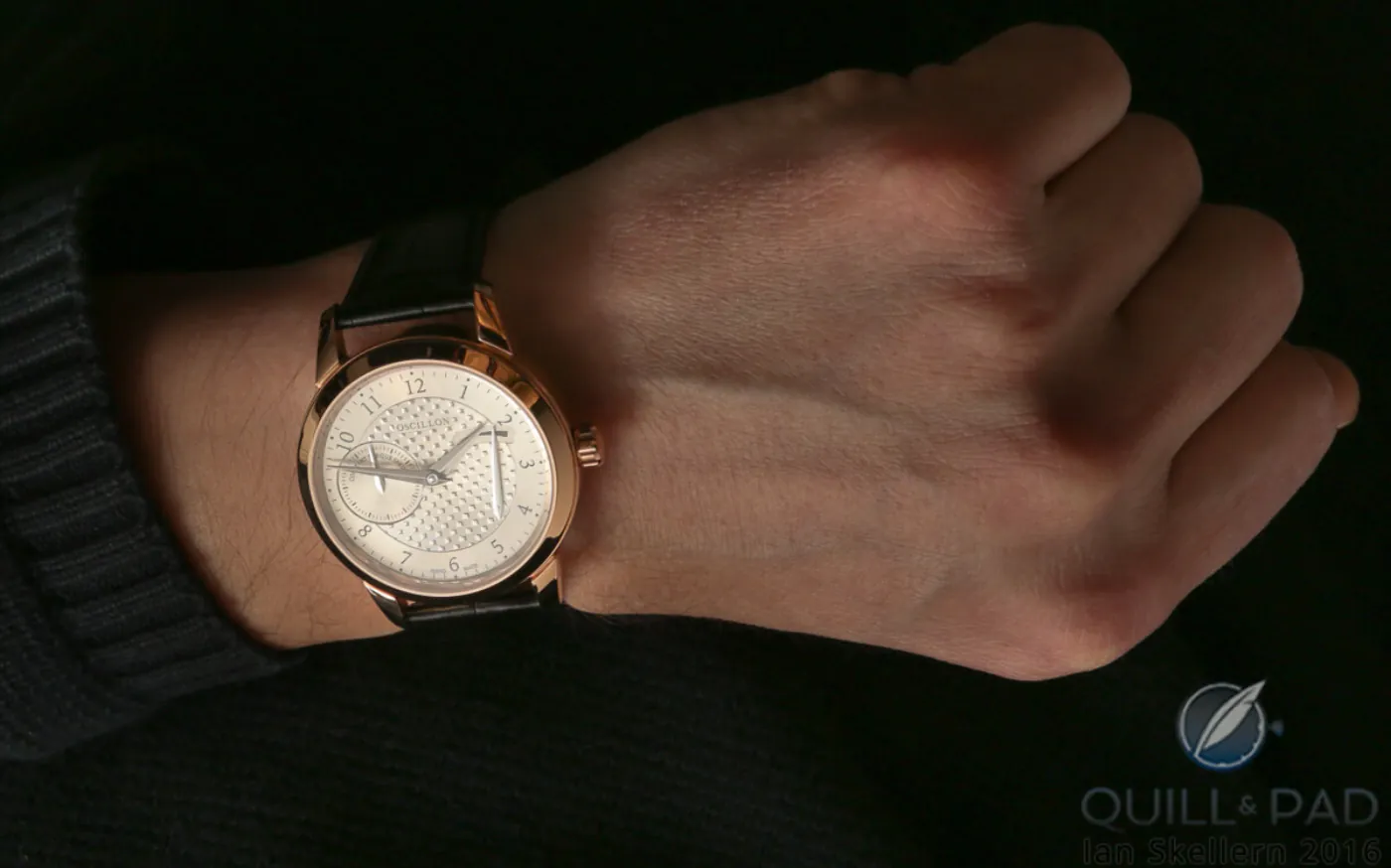
Oscillon was founded in 2012 by Cyrano Devanthey and Dominique Buser, two graduates of the Solothurn watchmaking school who had spent years inside Urwerk's research atelier. Their philosophy is austere: build the watch from raw stock using only traditional, often pre-war machines, and design every component around the geometry of the tools that will cut it. The result, in 2016, was a single reference called L'Instant de Vérité, "the moment of truth."
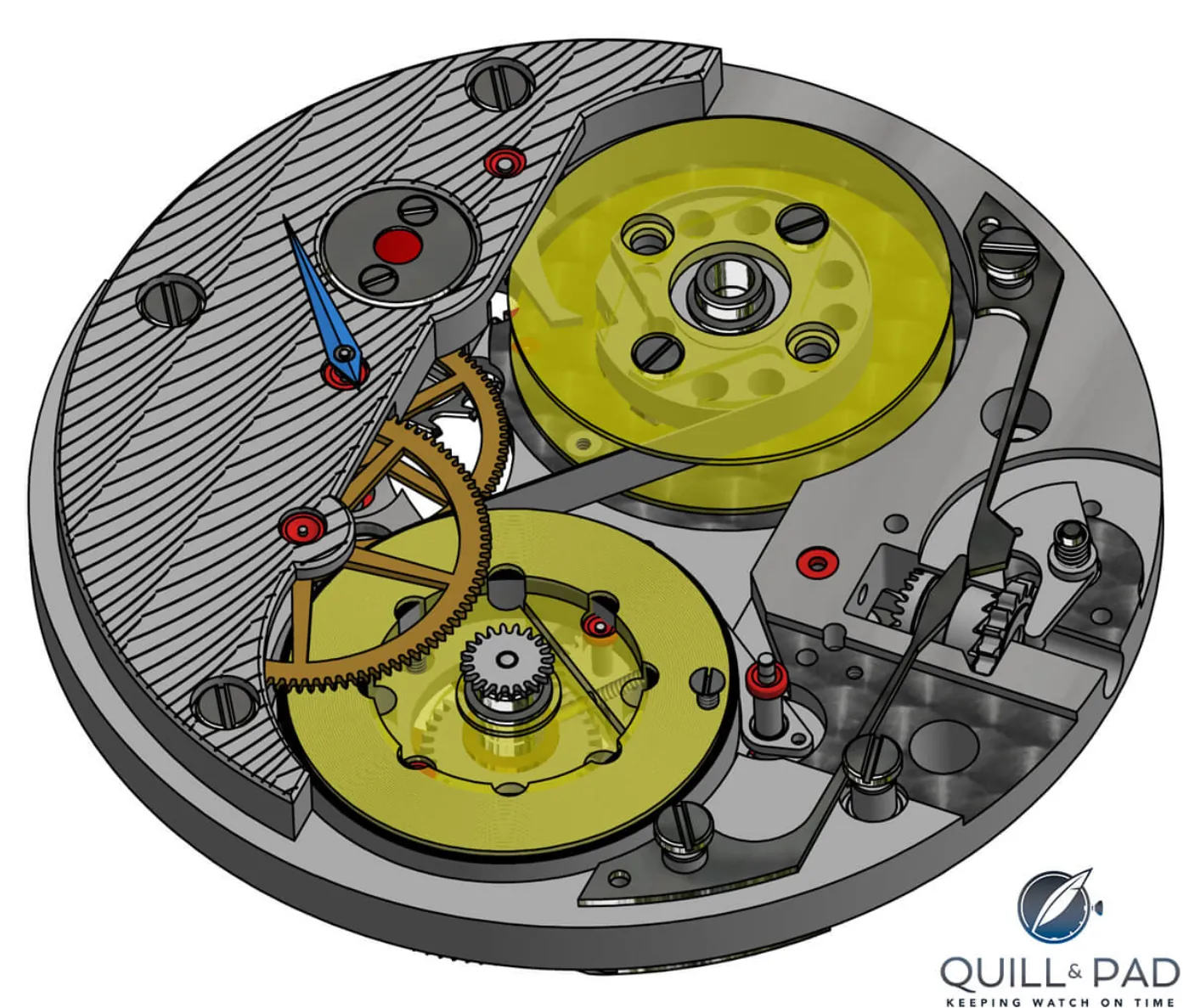
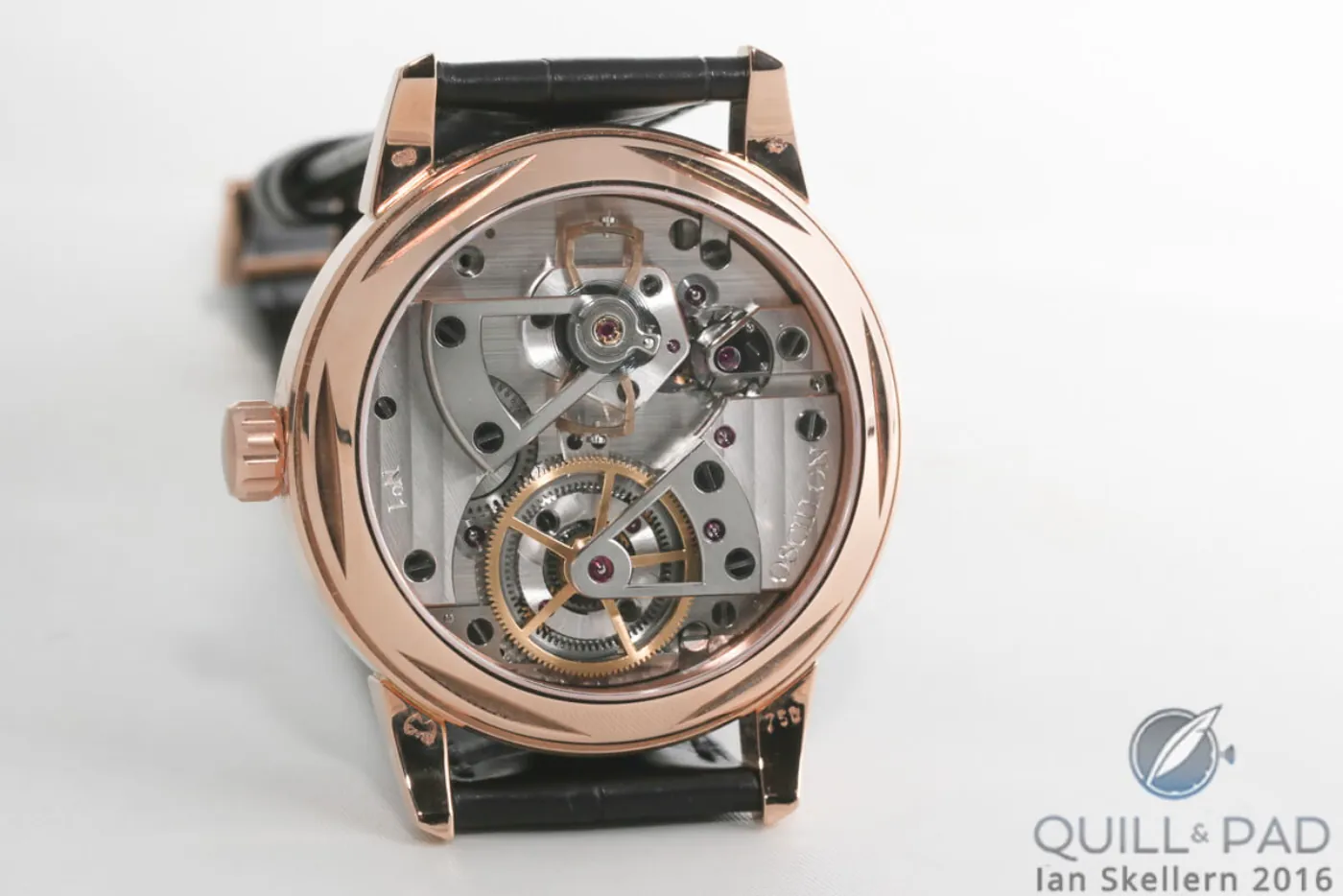
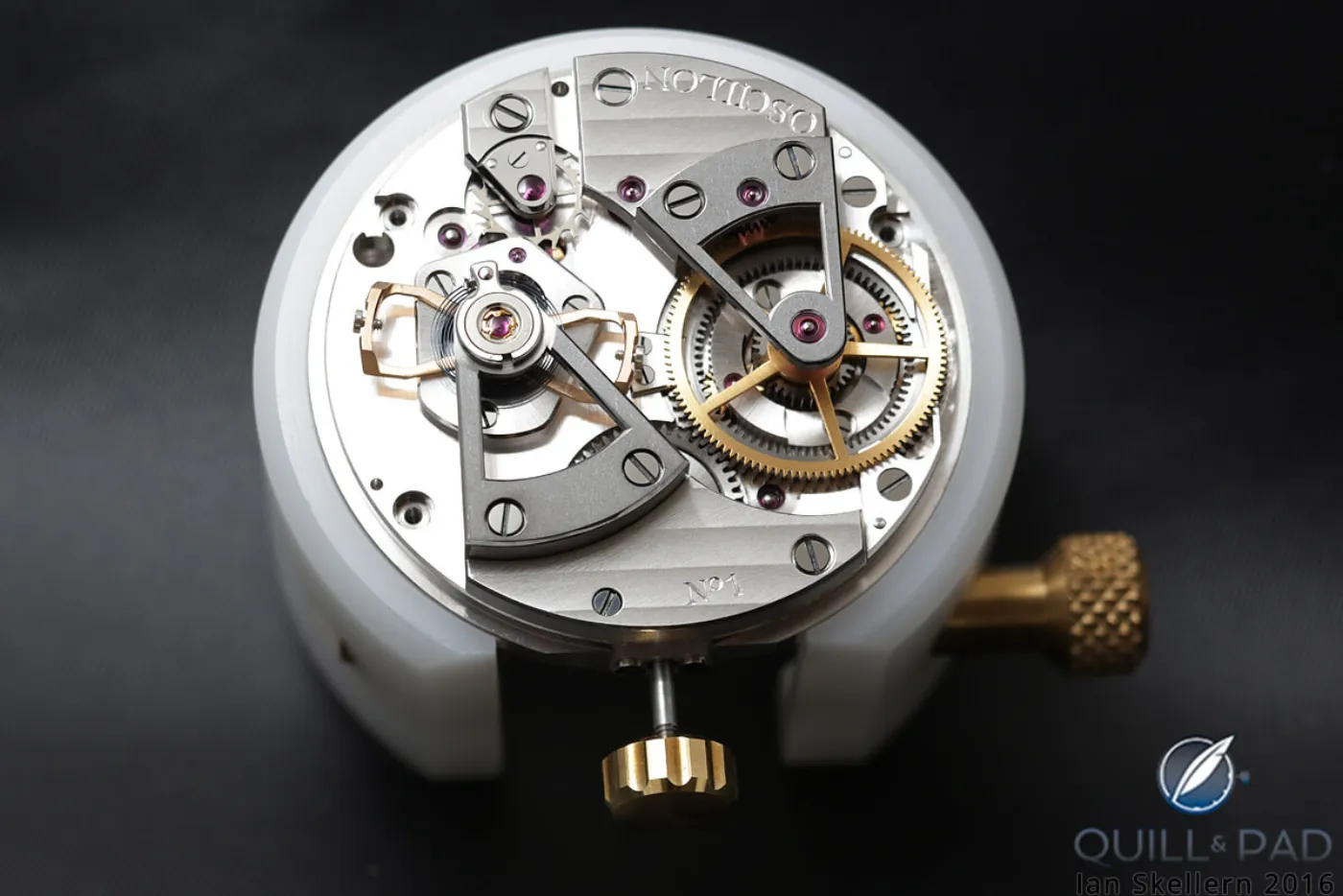
The mainspring of this watch is the first true Tensator ever fitted to a wristwatch. The arrangement is a pair of drums, one small and one large, connected by a long S-shaped flat spring that is wound through a central planetary gear. As the watch runs, the spring transfers from the storage drum to the torque drum, unwinding against its natural curve and pulling itself, at constant force, back toward its preferred coiled state. The output torque to the going train is, in Buser and Devanthey's words, "constant" to within the tolerances of hand-built parts. The watch runs for 68 hours on a full wind.
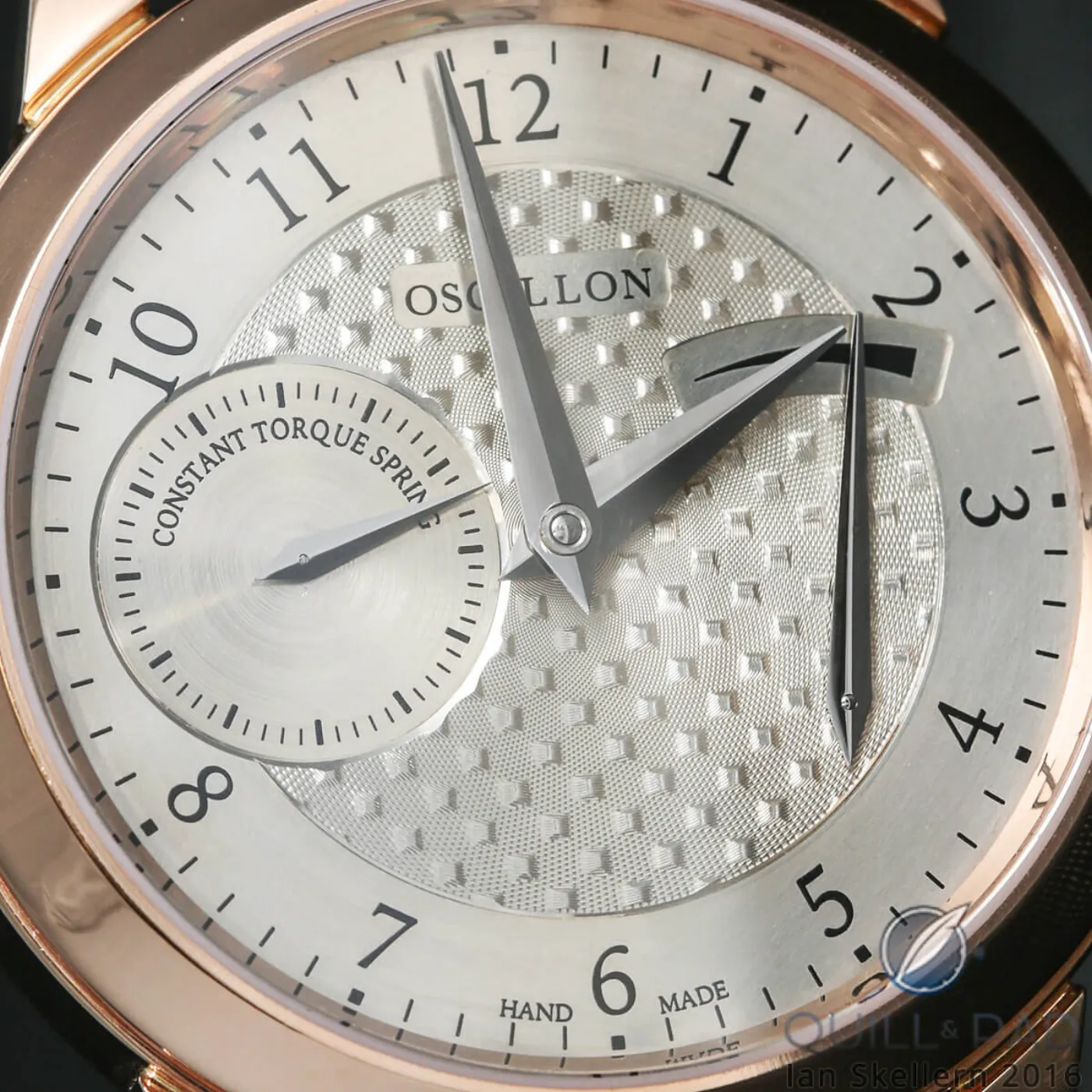
Getting there took years. Tensators are an industrial product, not a horological one, and almost no published data existed on their behaviour at watch scale. Buser and Devanthey had to redesign the differential, learn how to cut and form the strip themselves, and discard most of their early attempts. Their workshop, by their own account, contains "bins full of unusable parts." Production is capped at five watches per year. The dial is hand-engine-turned German silver, the case is 40mm red gold, and the movement contains 42 hand-made screws in six different sizes. The retail price at launch was 162,800 Swiss francs, sold exclusively through Türler in Zurich.
Naissance d'Une Montre 2
The Oscillon Tensator did not stay a one-shop curiosity. In 2019 the Time Aeon Foundation, the patron body co-founded by Robert Greubel and Stephen Forsey to preserve hand-craft watchmaking, announced its second flagship project: Naissance d'Une Montre 2. The first such project had paired master Philippe Dufour with the apprentice Michel Boulanger to build a single tourbillon entirely by hand. The second handed the brief to Devanthey and Buser, with Felix Baumgartner of Urwerk and the Greubel Forsey atelier as mentors.
The resulting watch carried the Oscillon Tensator architecture, an inverted movement to expose the mechanism, a bow-tie balance wheel, and an 80-hour power reserve. It was finished to Greubel Forsey standards and sold as a unique piece at Phillips, Geneva, on 13 to 14 May 2023 with an estimate of CHF 200,000 to 400,000. It is the most public showcase the Tensator system has had inside a wristwatch.
The Older Solution: The Fusee
The constant-torque problem predates the Tensator by centuries. The earliest answer was mechanical, not material. The fusee, a conical pulley linked to the mainspring barrel by a fine chain, dates to at least the fifteenth century and was standard on precision pocket watches into the early twentieth. As the mainspring runs down and its torque falls, the chain unwinds onto the wider end of the fusee, giving the going train mechanical advantage that compensates almost exactly for the lost spring force. The output torque seen by the escapement is, ideally, constant.
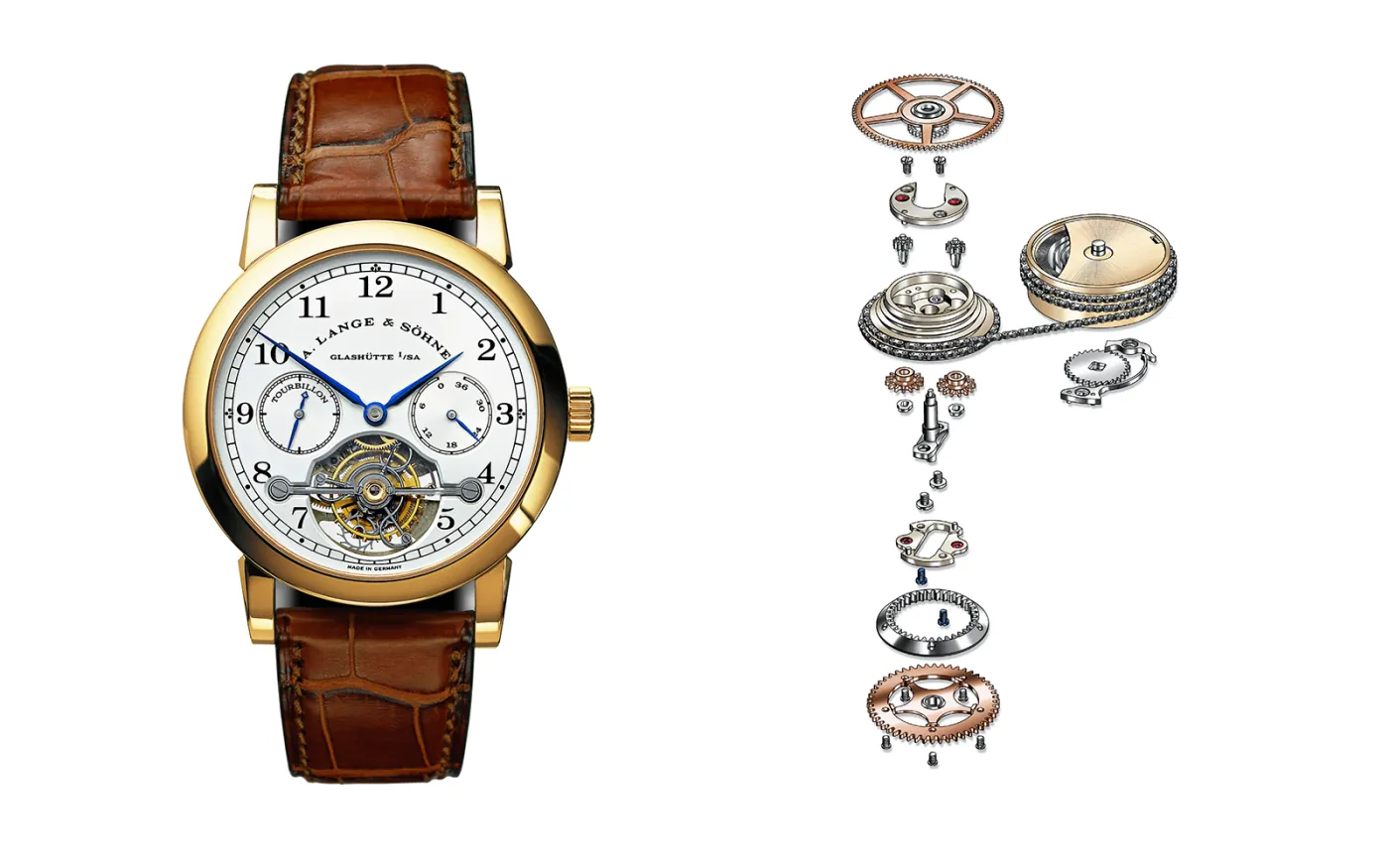
The fusee is brilliant and bulky. It costs vertical space, adds complexity, and is largely incompatible with thin wristwatches. A. Lange & Söhne's Tourbillon "Pour le Mérite" of 1994 revived the chain-and-fusee in wristwatch form. Romain Gauthier's Logical One reworked the principle as a flat snail cam with ruby rollers, fusee geometry without the vertical penalty. Ferdinand Berthoud's Chronomètre FB 2RE (2020) became the first wristwatch to combine a fusee, a remontoir, and stopwork in one movement, a triple constant-force architecture.
The Remontoir d'Égalité
Between the fusee and the Tensator sits the most common modern solution: the remontoir d'égalité. A remontoir is a secondary energy buffer. A small, very weak spring sits between the mainspring barrel and the escapement. It is rewound by the main barrel at regular intervals, typically every one to ten seconds, and during the interval between rewinds it is what actually drives the escapement. Because the secondary spring is always rewound to the same tension, the escapement sees a near-constant torque regardless of the state of the main barrel. The remontoir is, functionally, a Tensator approximation built from gears and a small spring.
The signature giveaway, visible from across a room, is the dead-beat seconds hand: the seconds tick advances in discrete steps, like a quartz movement, because the remontoir releases its energy in fixed intervals. A mechanical watch with the seconds hand of a quartz watch is almost always a remontoir movement.
The Modern Remontoir Roster
The list of serious wristwatches built around a remontoir is now substantial. The headline entries:
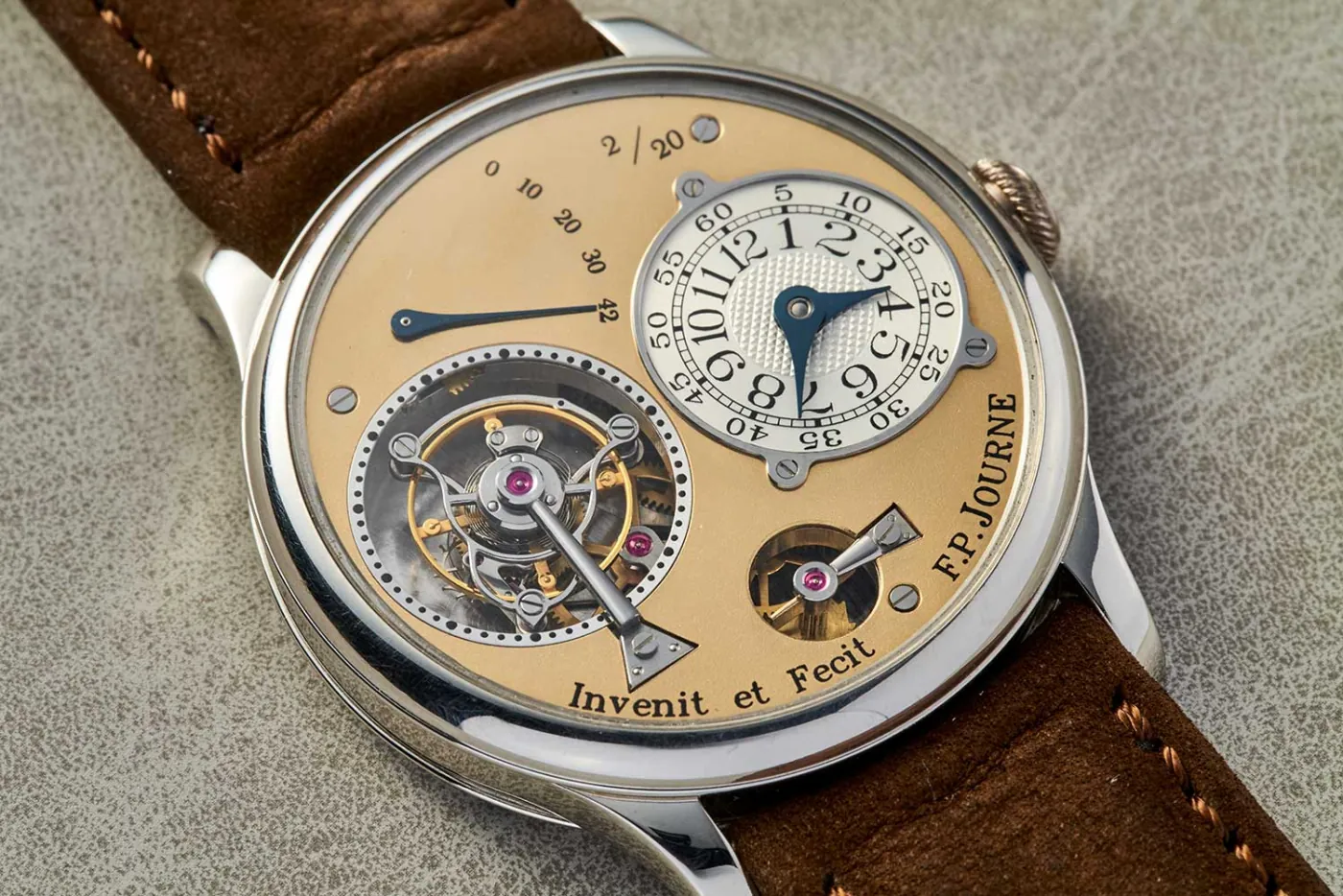
- F.P. Journe, Tourbillon Souverain à Remontoir d'Égalité (1999, calibre 1300). The first serially produced remontoir wristwatch in history, using a flat-bladed spring rather than the older coiled designs. Journe's Chronomètre Optimum and the 2020 Chronomètre à Résonance later extended the same architecture.
- A. Lange & Söhne, Lange 31. A coiled-spring remontoir buffers a 31-day power reserve, so the rate stays stable across an entire month. The Richard Lange Perpetual Calendar "Terraluna" uses the same architecture in a more wearable case.
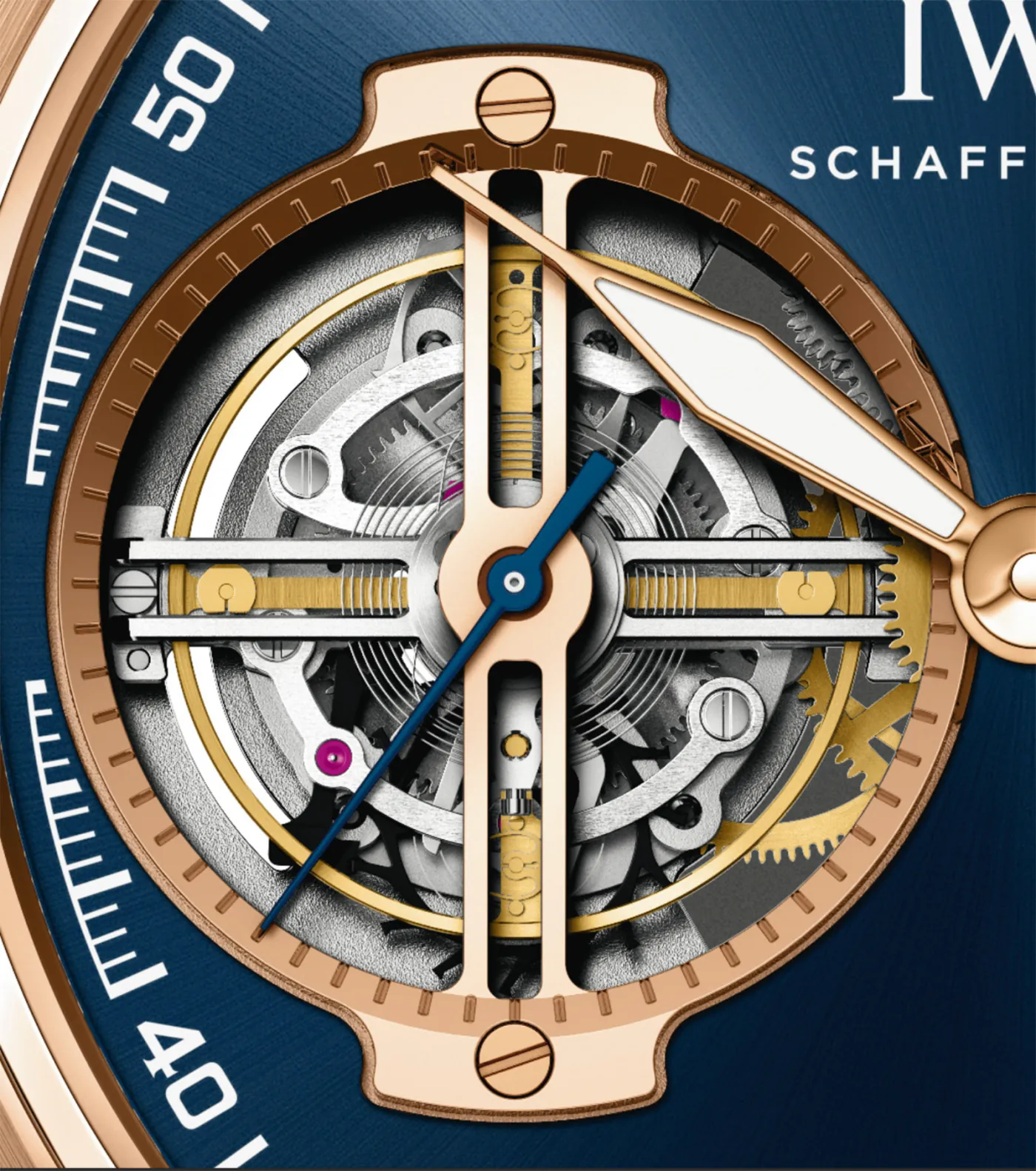
- IWC, Portugieser Sidérale Scafusia and Big Pilot Constant-Force Tourbillon (calibre 89630). Cage-mounted remontoir with a Reuleaux cam and force-balancing eccentric, all inside the rotating tourbillon. Big Pilot edition limited to 15 pieces.
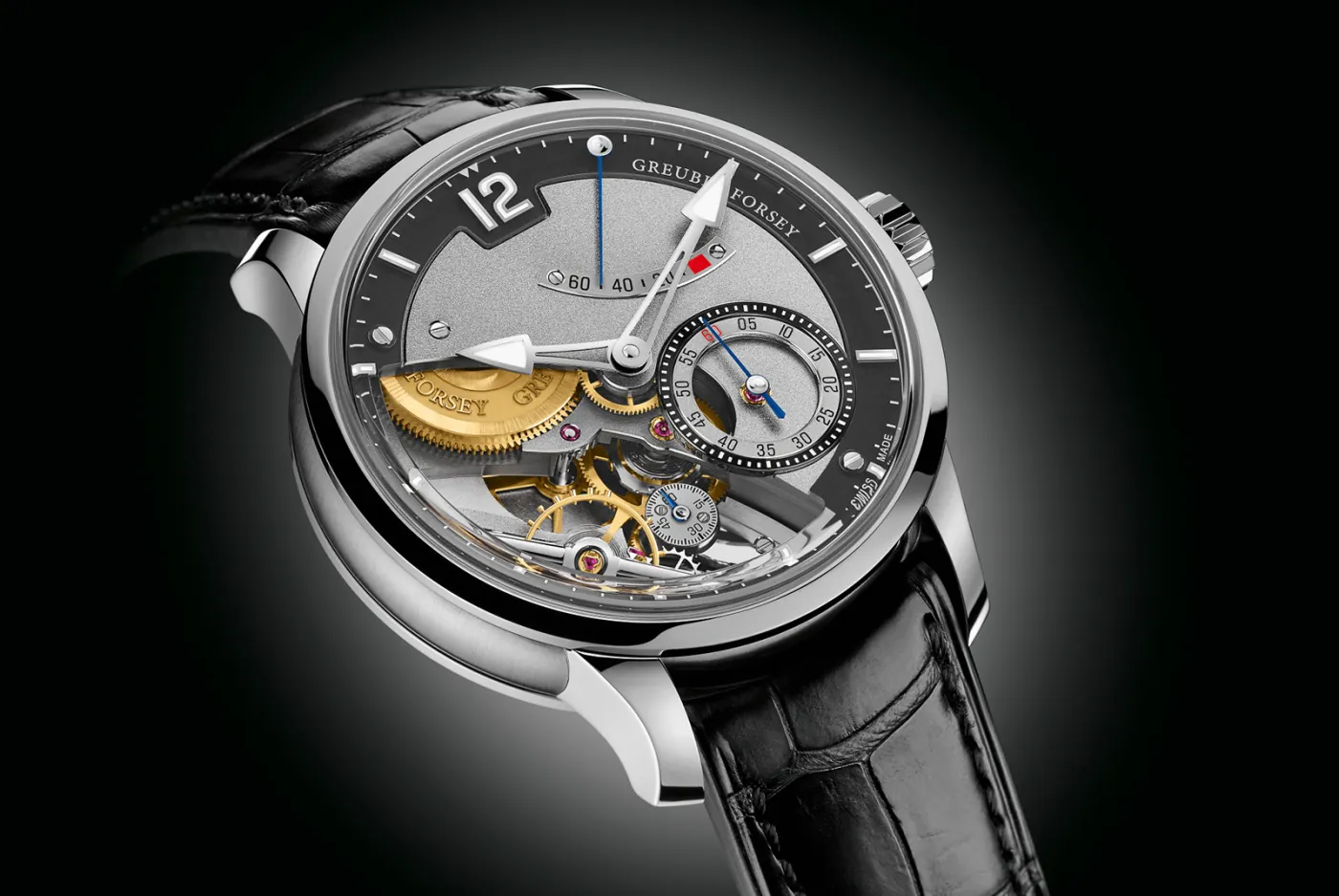
- Greubel Forsey, Différentiel d'Égalité (2018) and Double Balancier à Différentiel Constant (2016). The latter uses a remontoir rearmed every four minutes, sitting above a differential tower that pools energy from two balances.
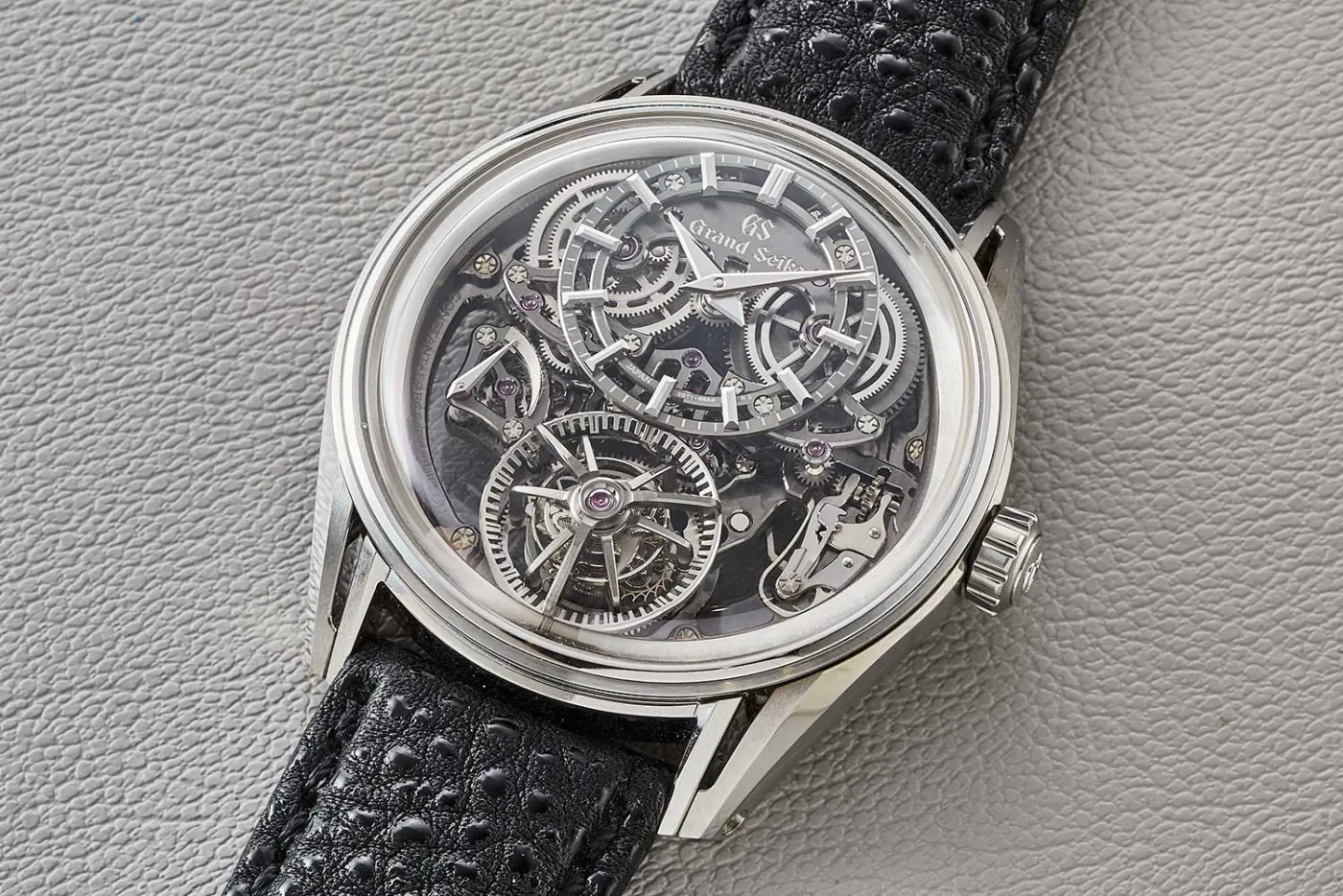
- Grand Seiko, Kodo Constant Force Tourbillon (2022, calibre 9SA0). Dual-cage design with the outer cage driven by the gear train and the inner cage powered by a remontoir. Won the GPHG Chronometry Prize in its launch year.
- Arnold & Son, Constant Force Tourbillon (2016, calibre A&S5119, around USD 200,000) and the new Constant Force Tourbillon 11 (2025), an architectural homage to Breguet No. 169.
- Grönefeld, 1941 Remontoire (2017). Eight-second remontoir with a three-armed flying regulator. Limited to 188 movements, now discontinued.
- Bernhard Lederer, Central Impulse Chronometer (2022). Twin ten-second remontoirs offset by five seconds, sitting between the third and fourth wheels.
- Andreas Strehler, Sauterelle and Trans-Axial Tourbillon. The Trans-Axial places the remontoir on the same axis as the tourbillon cage, a first.
- Urban Jürgensen, UJ-1 Tourbillon with Remontoir d'Égalité (2025). Derek Pratt's Reuleaux-triangle remontoir, finally completed in series form by a team including Kari Voutilainen.
- Lang & Heyne, Friedrich II Remontoir (2022). Reuleaux-triangle remontoir in a Saxon-finished movement, with a lume-filled deadbeat seconds hand.
The Constant-Force Escapement
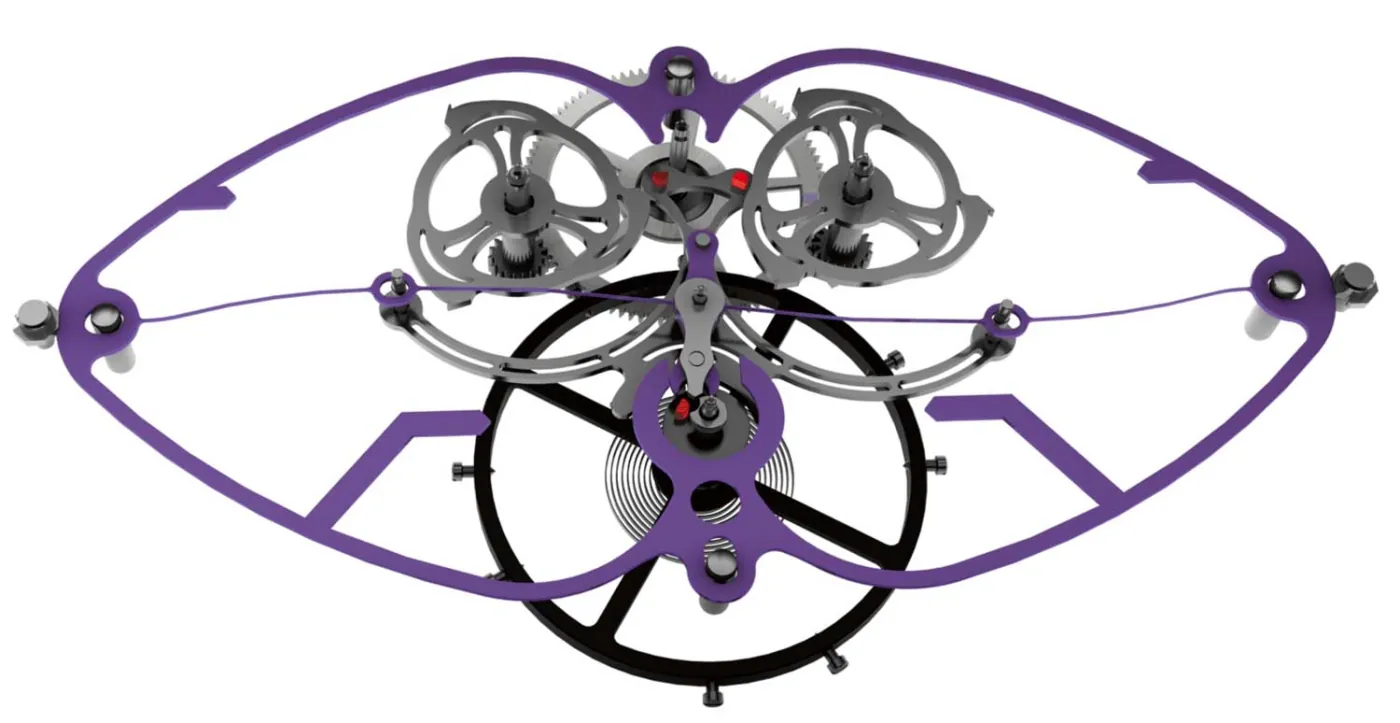
An alternative is to attack the problem at the escapement itself. A constant-force escapement uses a small auxiliary blade spring that is tensioned and released at every beat. The impulse delivered to the balance wheel is governed by that blade spring, not by the highly variable torque arriving from the train.
Girard-Perregaux's Constant Escapement L.M. (2008, updated as the Neo Constant Escapement in 2023) is the most photographed example. A 14-micron silicon S-shaped blade snaps between two stable buckled positions at every beat, delivering identical impulses regardless of the upstream torque. The original was a 48mm white-gold prototype; the Neo version cut 14 parts, added seven new patents, and shrank the case to 45mm. Ulysse Nardin's Anchor Escapement (2014) is a more compact silicon-blade variant, deployed inside the Anchor Tourbillon. Both architectures are magnetic-field proof, run without lubrication, and never see the upstream torque curve at all.
Where the Idea Is Heading: Silicon Resonators
The most radical recent application of the constant-force principle is not a Tensator at all but a complete rethinking of the oscillator. Pierre Genequand's Genequand system, developed at the CSEM research institute in Neuchâtel and licensed in modified form by Parmigiani and others, replaces the balance wheel and hairspring with a monolithic silicon flexure resonator. The flexure stores and releases energy with extremely low friction and is far less sensitive to driving-torque variation than a traditional pallet escapement. The system is, in effect, a constant-torque movement by virtue of being immune to torque variation in the first place. Same goal, different route.
Why It Matters
The Tensator and its horological descendants speak to a deep truth about mechanical precision. You can attack rate variation in four places: the mainspring, an intermediate energy buffer, the escapement, or the oscillator itself. Every serious accuracy improvement of the last hundred years has done one of those four things. The Tensator principle, a constant-force device somewhere in the chain, is the connective tissue.
For a collector, the practical takeaway is that words like "constant force", "remontoir", "dead-beat seconds", "fusee" and "constant escapement" all point at the same engineering ambition. The mechanism is different. The goal is identical. Flatten the torque curve. Stabilise the impulse. Get the rate to behave.
Market Position
Constant-force watches occupy the upper tier of mechanical horology. Indicative recent levels:
- Oscillon L'Instant de Vérité: CHF 162,800 retail at launch. Maximum 5 units per year, virtually no secondary supply.
- Naissance d'Une Montre 2: estimate CHF 200,000 to 400,000 at Phillips Geneva, May 2023.
- F.P. Journe Tourbillon Souverain à Remontoir: regularly between USD 150,000 and 300,000 pre-owned depending on series and dial. The 1993 prototype 15/93 sold at Phillips for CHF 7.32 million.
- A. Lange Lange 31: mid-six figures, low five-figure annual production.
- Arnold & Son Constant Force Tourbillon: around USD 200,000 at launch.
- Grand Seiko Kodo: around USD 350,000, limited series.
- Girard-Perregaux Neo Constant Escapement: between roughly USD 60,000 and 120,000 depending on case material and edition.
What you are paying for is not, strictly, accuracy. A well-regulated modern chronometer-grade movement without any constant-force device will keep time within a few seconds a day. What you are paying for is the visible mechanical solution to a problem that took horology three centuries to articulate cleanly. The dead-beat seconds hand, the bare silicon blade, the wheel that rotates exactly once per second under load, the slow S-shaped Tensator strip moving between two drums, those are the constant-force principle made wearable.
Image Credits and Further Reading
Oscillon imagery (Tensator spring, wrist shot, dial, caseback, movement no. 1) reproduced for editorial purposes from Quill & Pad's coverage of the L'Instant de Vérité (2016 and 2021). Movement and detail shots of the IWC Constant-Force Tourbillon, Girard-Perregaux Constant Escapement, F.P. Journe Tourbillon Souverain à Remontoir, Greubel Forsey Différentiel d'Égalité, Grand Seiko Kodo, and A. Lange & Söhne Tourbillon Pour le Mérite reproduced from Revolution's Complete Guide to Constant-Force Remontoir d'Égalité (Wei Koh, 2025).
- Quill & Pad: Oscillon L'Instant de Vérité, the most, if not the only, fully handmade watch available today (2016, updated 2021).
- Phillips: Naissance d'Une Montre 2, Greubel + Urwerk + Oscillon, lot essay, Geneva Watch Auction XVII, May 2023.
- Revolution: The Complete Guide to Constant-Force Remontoir d'Égalité, Wei Koh, 2025.
- Monochrome Watches: The dilemma of constant force in watchmaking.
- George Daniels, Watchmaking, chapters on the fusee and remontoir.
- Pierre Genequand, CSEM technical papers on flexure oscillators.
- Anthony Randall, The Time Museum Catalogue of Chronometers, on fusee chronometers in the marine context.