Every other watch in this record book was made by a company. This one was made by a man, working alone in a valley in the Swiss Jura, who spent two and a half years shrinking a pocket watch mechanism until it would fit on a wrist.
In November 2021 the Philippe Dufour Grande et Petite Sonnerie No. 1 sold in Geneva for 4,749,000 Swiss francs, about 5.19 million dollars, against an estimate of one to two million. It was the first wristwatch ever built with a grande sonnerie, and the first watch to carry Dufour's name.
The result, in numbers
| Detail | Record |
|---|---|
| Maker | Philippe Dufour, working independently |
| Model | Grande et Petite Sonnerie No. 1 |
| Completed | 1992 |
| Significance | The first wristwatch with a grande sonnerie |
| Sale | Geneva Watch Auction XIV, Phillips, lot 14 |
| Date | November 2021 |
| Estimate | CHF 1,000,000 to 2,000,000 |
| Result | CHF 4,749,000, about USD 5,192,000 |
| Total made | Eight grande sonnerie wristwatches, over many years |
What a grande sonnerie does, and why it was hard
A minute repeater chimes the time when you ask it to. A grande sonnerie chimes on its own, striking the hours and quarters as they pass, like a miniature grandfather clock that lives on your wrist. A petite sonnerie does the same without repeating the hour at each quarter.
The difficulty is power. A watch that strikes automatically, all day, needs a far larger energy budget than one that only tells the time, and it needs a separate mechanism to govern the striking so it does not drain itself or damage its own gears. In a pocket watch there is room for that. In a wristwatch case there is not.
Dufour spent about two and a half years on the miniaturisation. When he finished in 1992, no one had done it before.
The man, and the valley
Philippe Dufour works in the Vallée de Joux, the high valley in the Jura mountains where Swiss complicated watchmaking has been concentrated for two centuries. It is cold, remote, and historically poor: farming families took up watchmaking through the long winters because there was nothing else to do, and the skill compounded across generations.
He spent his early career restoring complicated pocket watches and working for established houses. He set up on his own in 1989, and his first piece under his own name was a grande et petite sonnerie pocket watch. Selling it funded the wristwatch that followed.
Dufour is known less for invention than for finishing: the hand work applied to a movement's edges, screws and surfaces after the mechanism already runs. Bevels are filed and polished by hand until they throw a single clean line of light. It is entirely invisible in normal use and it is the reason collectors talk about him the way they do.

What our own data shows
Dufour made very few watches, so this could easily be a market nobody can measure. It is not. Our archive holds 17 sales of watches Dufour actually made, across all three of his models, from 2023 to 2026.
That is enough to build the full ladder. Comparing in dollars only, so the figures are like for like:
| Philippe Dufour, sold in USD | Lots | Average |
|---|---|---|
| Grande et Petite Sonnerie | 1 | $3,690,000 |
| Duality | 2 | $2,570,750 |
| Simplicity | 5 | $755,395 |
The ladder runs exactly as the complexity does. The Simplicity is a time-only watch, the model Dufour made in the largest numbers, and it averages three quarters of a million dollars. The Duality, with its two escapements, roughly triples that. The Grande Sonnerie sits at the top.
What is remarkable is the floor. A time-only watch, with no complication at all, averaging 755,395 dollars and ranging up to 1,168,400. There is no mechanism in a Simplicity that a competent factory could not build. What cannot be bought is the finishing, and the fact that one man in his seventies made a few hundred of them.
Our single Grande Sonnerie result is a sapphire-dial example that made 3,690,000 dollars at Phillips in New York in December 2024. Set against the 2021 record for No. 1, that puts the first one Dufour ever built at about 1.4 times a later example, which is what the phrase "number one" is worth in this market.
A caution about the numbers
These are small samples, and we would rather say so than imply more precision than we have. One sonnerie, two dualities, five dollar-denominated simplicities. The pattern is consistent and the ordering is unambiguous, but a single strong result would move any of these averages materially.
There is also a filtering problem worth naming. Searching our archive for Dufour returns 32 lots, but roughly half are watches he did not make: collaborations, charity pieces and watches merely associated with him or his wife. Counting those would drag the average down and misrepresent the market for his own work. The 17 figure above counts only Simplicity, Duality and Grande Sonnerie.
Frequently asked questions
What is the Philippe Dufour Grande et Petite Sonnerie?
The first wristwatch ever made with a grande sonnerie, a complication that chimes the hours and quarters automatically. Dufour completed No. 1 in 1992 after around two and a half years of work.
How much did it sell for?
CHF 4,749,000, roughly 5.19 million dollars, at Phillips in Geneva in November 2021, against an estimate of one to two million francs.
How many did he make?
Eight grande sonnerie wristwatches in total, produced over many years. His earlier grande et petite sonnerie was a pocket watch, completed in 1989.
Why is Philippe Dufour so highly regarded?
For hand finishing rather than invention. The bevels, screws and surfaces of his movements are worked by hand to a standard almost no series production reaches, and he has made only a few hundred watches in total.
What does a Philippe Dufour watch cost?
In our records his time-only Simplicity averages 755,395 dollars, the Duality 2,570,750, and a Grande Sonnerie made 3,690,000. Prices have risen sharply as his output has effectively ended.
What is the difference between grande and petite sonnerie?
A grande sonnerie strikes the hour and the quarters at every quarter. A petite sonnerie strikes the quarters but does not repeat the hour each time, which uses less power.
Why it matters
The rest of this record book is about scarcity within large companies: the one steel example, the dial that did not sell, the watch a famous man happened to own. Dufour is a different case. Nothing about his watches is accidental or lucky. There is no marketing department, no discontinued reference, no misprinted dial.
What the market is paying for is a person's hand and a finite amount of remaining time. He is in his seventies, the output is essentially complete, and the total number of watches bearing his name is smaller than a single week of production at a large manufacture. Our own figures show even his simplest watch clearing three quarters of a million dollars, which is the clearest evidence in this whole archive that at the top of this market, technique is worth more than technology.
Market figures are drawn from TheWatchInfo's auction database, covering sold lots from 2009 to 2026 across the auction houses we track. Sale details for the 2021 record are as published by the auction house.
Image credits
No photograph of the Grande et Petite Sonnerie No. 1 is available under a licence that permits reuse. This article is illustrated with openly licensed photography of the valley where Dufour works and of independent watchmaking. Each image is hosted by us and credited below.
- Header. The Vallée de Joux under fog. Photograph by Kfluckiger, licensed CC BY-SA 4.0.
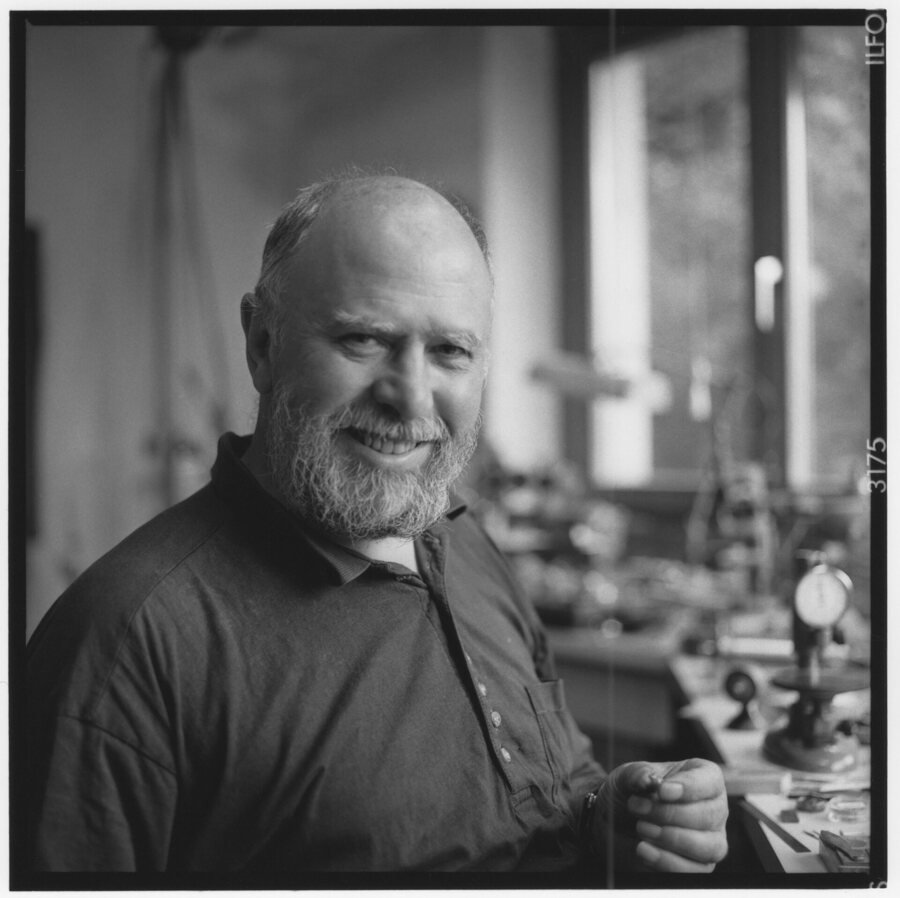
- At the bench. The independent watchmaker Derek Pratt in his Swiss workshop. Photograph by Juliet Haller, licensed CC BY-SA 4.0.
- The valley in winter. Lac Brenet, Vallée de Joux. Photograph by Christian David, licensed CC BY-SA 4.0.