In the spring of 1954, the last emperor of Vietnam walked into a watch shop in Geneva and asked for the rarest and most precious Rolex the company made. He was in the city for the conference that would end the First Indochina War and divide his country. The shop sent to the Rolex workshops, and a clerk arrived with a reference 6062 in yellow gold, black dial, diamonds set at the even hours.
Sixty-three years later that watch sold for 5,066,000 Swiss francs, about 5.06 million dollars, and became the most expensive Rolex ever sold at auction. It held that title for five months.
The result, in numbers
| Detail | Record |
|---|---|
| Reference | Rolex Oyster Perpetual 6062 |
| Case | 18 carat yellow gold |
| Dial | Black, with diamond markers at the even numerals |
| Complications | Triple calendar with moon phase |
| Bought | Geneva, spring 1954, by Emperor Bao Dai |
| First auction | 2002, CHF 370,000 |
| Record auction | Geneva Watch Auction FIVE, Phillips, 13 May 2017 |
| Result | CHF 5,066,000, about USD 5,060,427 |
| Gain across fifteen years | 13.7 times, about 19.1 percent a year |
Who Bao Dai was
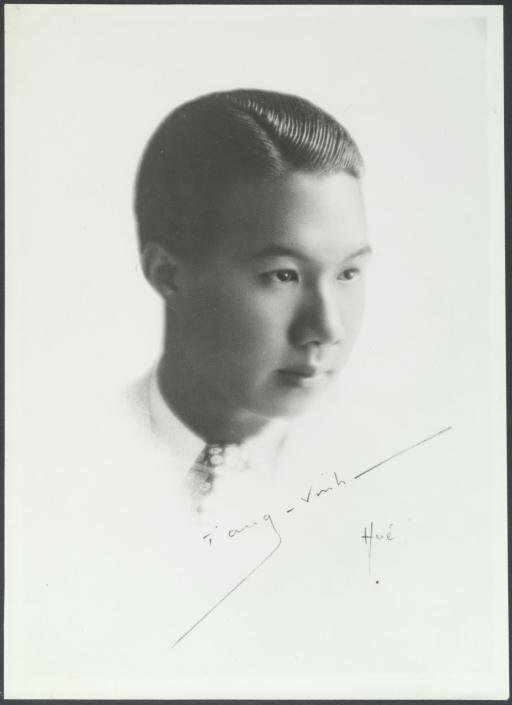
Nguyen Phuc Vinh Thuy became the thirteenth and last emperor of the Nguyen dynasty in 1925, aged twelve. The title Bao Dai means Keeper of Greatness. He was educated in France, returned to reform the judicial and educational systems, and spent his reign navigating French colonial rule, Japanese occupation and then the war that ended it.
By 1954 he was head of state of a country about to be partitioned. The Geneva Conference that spring set the seventeenth parallel as the dividing line. He bought the watch during those negotiations, from a retailer across the road from the hotel where they were held.
What makes this 6062 different
The reference 6062 is already a serious watch. It is a Rolex Oyster Perpetual with a triple calendar and moon phase, produced in the early 1950s in a few hundred examples, and it is one of only two references where Rolex combined a full calendar with a moon phase in a waterproof automatic case. Most were made with light dials.
Three are known with a black dial and diamond markers. Of those three, the Bao Dai is the only one with the diamonds set at the even numerals, at two, four, six, eight and ten. The other two carry them at the odd positions.
That is the entire physical difference between this watch and its two siblings: which five of the twelve hour positions carry stones. Everything else about the value comes from the man who bought it and the room he bought it in.
What our own data shows
Our archive holds 8 sold examples of reference 6062, from 2011 to 2026, and 16 across the 6062 and the closely related 8171, the other Rolex triple calendar of the period.
Comparing in Swiss francs only, so the figures are like for like with the record:
| Reference 6062, sold in CHF | Lots | Result |
|---|---|---|
| The Bao Dai, 2017 | 1 | CHF 5,066,000 |
| Every other example we hold | 5 | Average CHF 764,014 |
The Bao Dai made roughly 6.6 times the average 6062 in our records. That is a smaller multiple than the Paul Newman Daytona or the steel 1518 commanded over their siblings, and the reason is instructive: an ordinary 6062 is already a rare and expensive watch. Ours range from CHF 177,800 to CHF 2,117,000. There is less distance to travel.
One thing our archive does not contain is a second black dial. Every 6062 we have recorded across fifteen years carries a light dial, most of them the version collectors call the Stelline for its star-shaped markers. Rolex titles in our data do specify dial colour where it matters, so this is an absence rather than a gap in the records: in eight sales we have never seen one of the three black dials come to market.
A record that has since been passed
In October 2025 one of the other two black dial 6062s, the version with diamonds at the odd numerals, sold for about 6.2 million dollars. That is now the highest price recorded for the reference, and it exceeds the Bao Dai's 2017 result.
We should be straightforward about a limit here. That sale was held by an auction house we do not currently track. Our archive covers three houses, and the 2025 result is not in it. We are reporting it from published sources rather than from our own data, which is a distinction we would rather make explicit than paper over.
It is also a neat illustration of how thin these populations are. Three watches share this dial. Two of them have now set records for the reference, eight years apart, and the difference between them is which hour markers hold the diamonds.
What the fifteen-year gap shows
The Bao Dai is one of the few watches in this record book with two documented prices in the same currency, which removes the exchange rate question entirely.
- 2002: CHF 370,000, itself a record for a Rolex at the time
- 2017: CHF 5,066,000
- Gain: 13.7 times
- Compound annual return: about 19.1 percent a year across fifteen years
Set that beside the steel 1518, which returned about 2.9 percent a year between its two sales. Both are landmark watches sold twice at auction. One compounded at nearly twenty percent, the other at less than three. The difference is where each sale sat in the cycle: the 1518 was already at a record in 2016, while the Bao Dai in 2002 sold before the vintage Rolex market had reached anything like its later level.
Frequently asked questions
What is the Bao Dai Rolex?
A Rolex Oyster Perpetual reference 6062 in yellow gold with a black dial and diamond markers, bought in Geneva in 1954 by Bao Dai, the last emperor of Vietnam. It is a triple calendar with moon phase.
How much did it sell for?
CHF 5,066,000, roughly 5.06 million dollars, at Phillips in Geneva on 13 May 2017. It had previously sold in 2002 for CHF 370,000.
Is it still the most expensive Rolex?
No. Paul Newman's own Daytona took that title in October 2017, five months later, at 17,752,500 dollars. Another black dial 6062 also passed the Bao Dai's price in 2025.
What makes it unique?
Three reference 6062s are known with a black dial and diamond markers. The Bao Dai is the only one with the diamonds at the even numerals rather than the odd ones.
How rare is a normal 6062?
Very. A few hundred were made in the early 1950s. Our archive records eight sales in fifteen years, averaging CHF 764,014 among the Swiss franc results.
Who was Bao Dai?
The thirteenth and last emperor of Vietnam's Nguyen dynasty, on the throne from 1925 at the age of twelve. He bought the watch while attending the 1954 Geneva Conference, which ended the First Indochina War and divided the country.
Why it matters
Most of the watches in this record book are valuable because of what they are: the only one in steel, the most complicated ever built, the dial nobody wanted at the time. The Bao Dai is valuable primarily because of who owned it, and the moment he bought it.
A head of state, in a foreign city, negotiating the partition of his own country, walks across the road and asks for the best watch available. The object carries that. Take away the emperor and you have a very rare Rolex worth perhaps a million francs. Add him, and the same watch is worth five.
Market figures are drawn from TheWatchInfo's auction database, covering sold lots from 2009 to 2026 across the auction houses we track. The October 2025 result is from published sources outside our archive and is identified as such.
Image credits
No photograph of the Bao Dai 6062 is available under a licence that permits reuse. This article is illustrated with public domain photographs of Emperor Bao Dai himself. Each image is hosted by us and credited below.
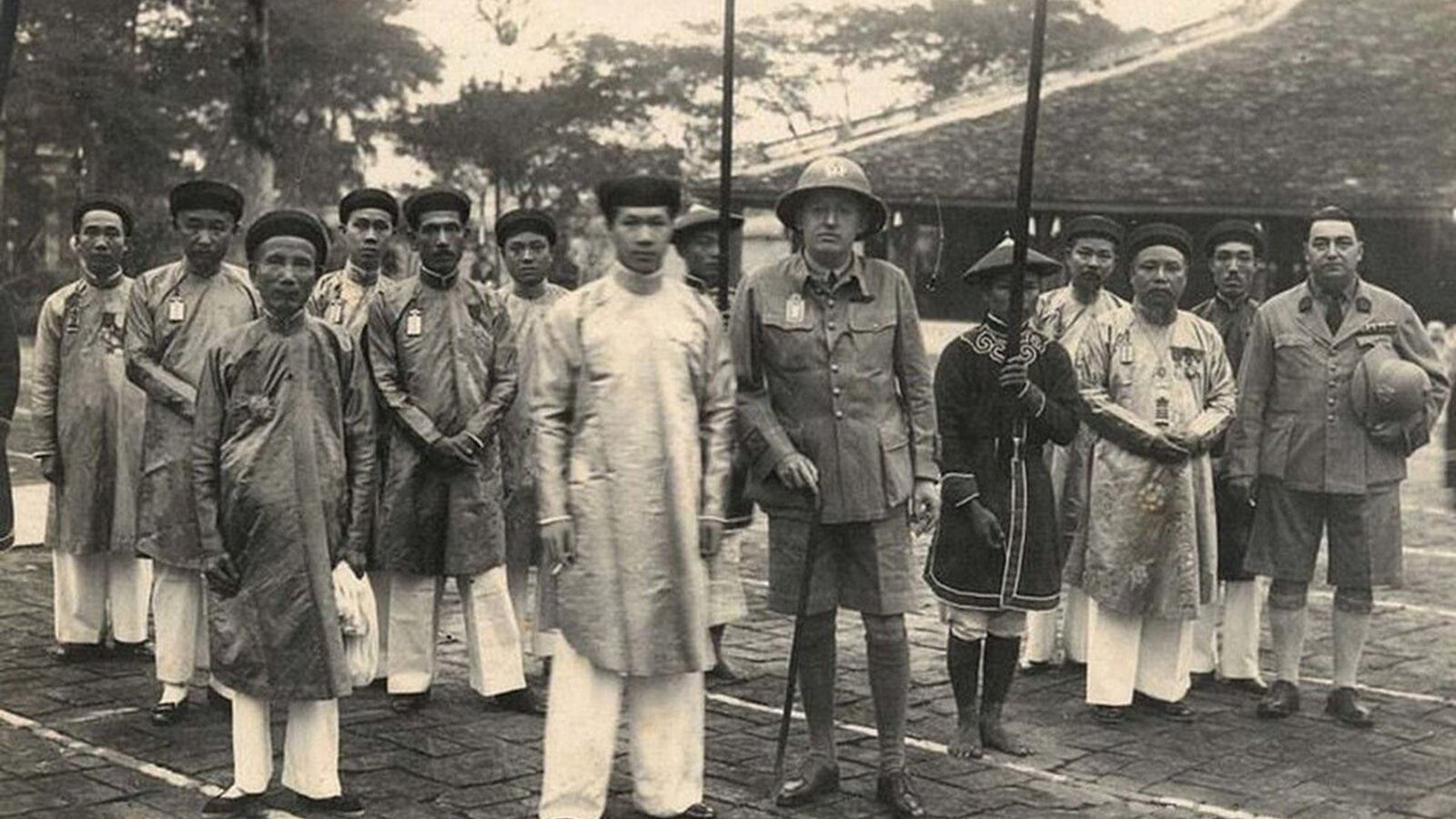
- Header. Emperor Bao Dai with court officials in Vinh, 1932. Photographer unknown, public domain.
- Portrait. Emperor Bao Dai, photographed in Hue by Tang Vinh, public domain.
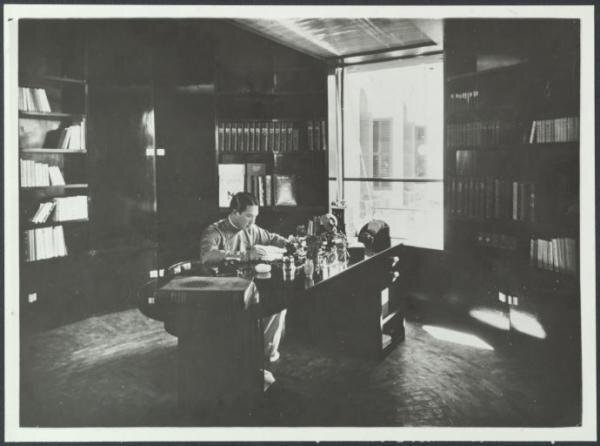
- At his desk. Photographer unknown, public domain.