George Daniels made watches entirely by hand. Not assembled, not finished: made. He is generally credited with mastering all the skills required to build a watch from raw material without outside help, which by his own count meant thirty two separate trades. Over a career he completed roughly twenty three watches.
On 2 July 2019 one of them, the Space Traveller I, sold at Sotheby's in London for 3,615,000 pounds, about 4.56 million dollars. It remains the most expensive English watch ever sold, and it made Daniels the most expensive independent watchmaker at auction.
He is also the reason a mass-produced Omega on a shop counter today runs on an escapement invented in a garden workshop in 1974, and that is where our own data has something unusual to say.
The result, in numbers
| Detail | Record |
|---|---|
| Maker | George Daniels, London |
| Model | Space Traveller I |
| Made | 1982 |
| Case | Yellow gold, 62.5 mm, a pocket watch |
| Escapement | Daniels independent double-wheel |
| Sale | Masterworks of Time, Sotheby's London, lot 143 |
| Date | 2 July 2019 |
| Estimate | GBP 700,000 to 1,000,000 |
| Result | GBP 3,615,000, about USD 4,561,407 |
| Multiple of high estimate | More than 3.6 times |
What it does, and why the name
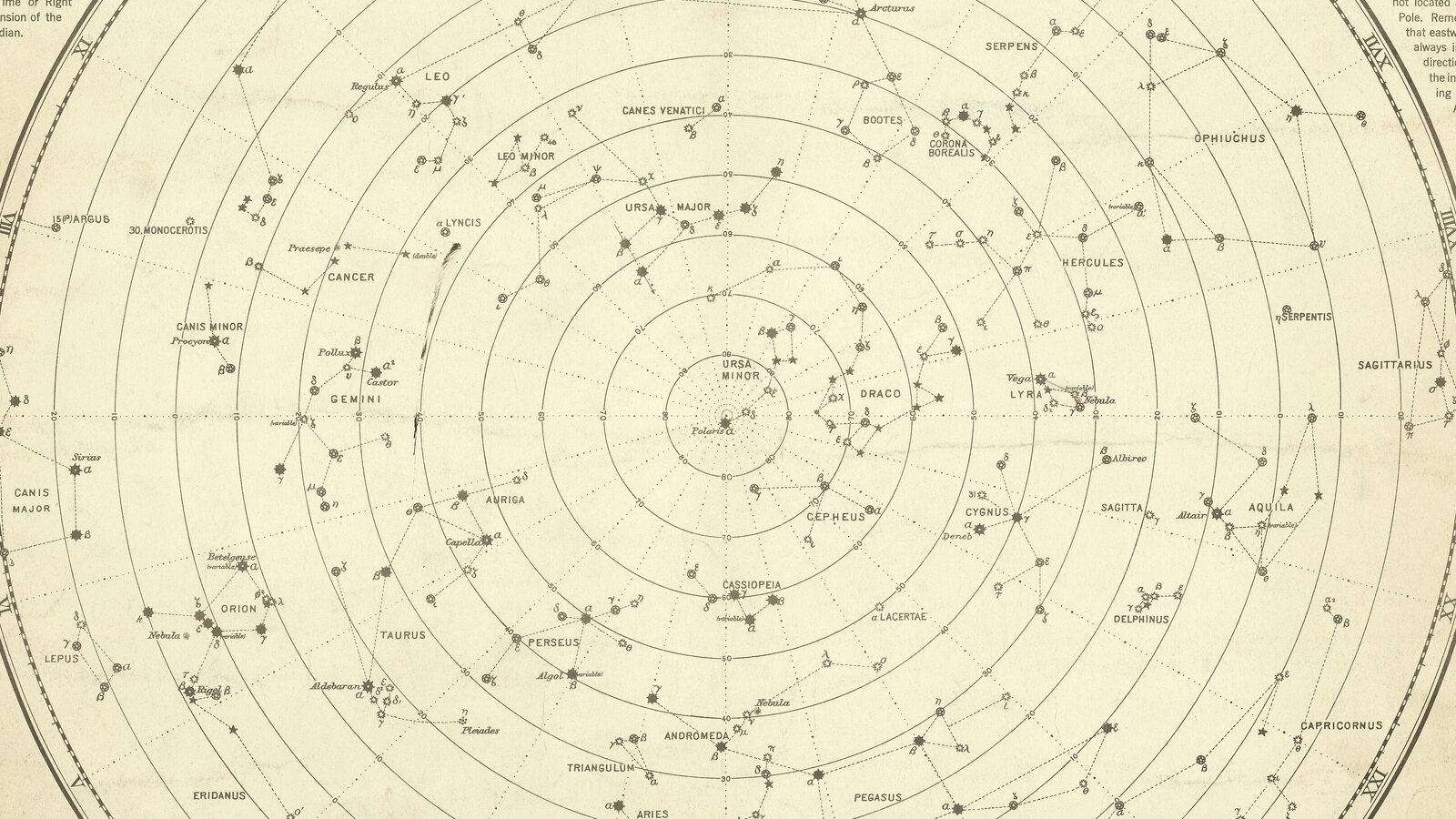
The Space Traveller was Daniels's response to the Apollo landings, which he admired. He designed it as a theoretical instrument for someone navigating off the Earth, which requires tracking two different kinds of time at once.
- Mean solar time, on a 24 hour display: ordinary clock time
- Sidereal time, also on 24 hours: time measured against the stars rather than the sun, which is what you navigate by in space
- Equation of time, the running difference between the two
- Annual calendar
- Age and phase of the moon
The movement is a gilt brass Lepine calibre with two going barrels driving contra-rotating trains, one for each kind of time, running 32 hours. Daniels calculated the sidereal indication as accurate to within about 0.4 seconds a year.
The escapement nobody wanted
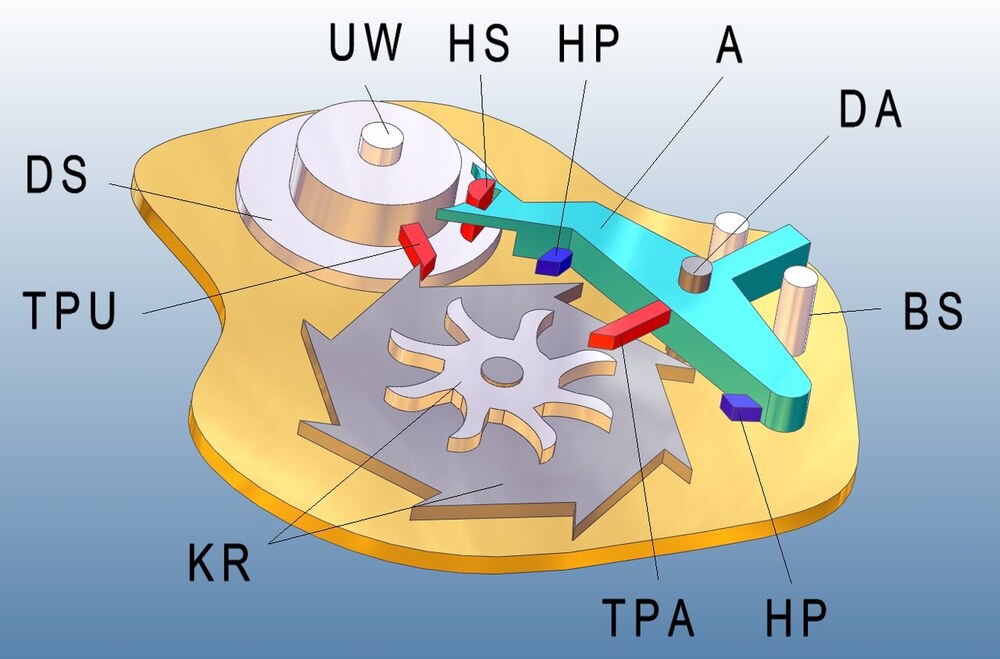
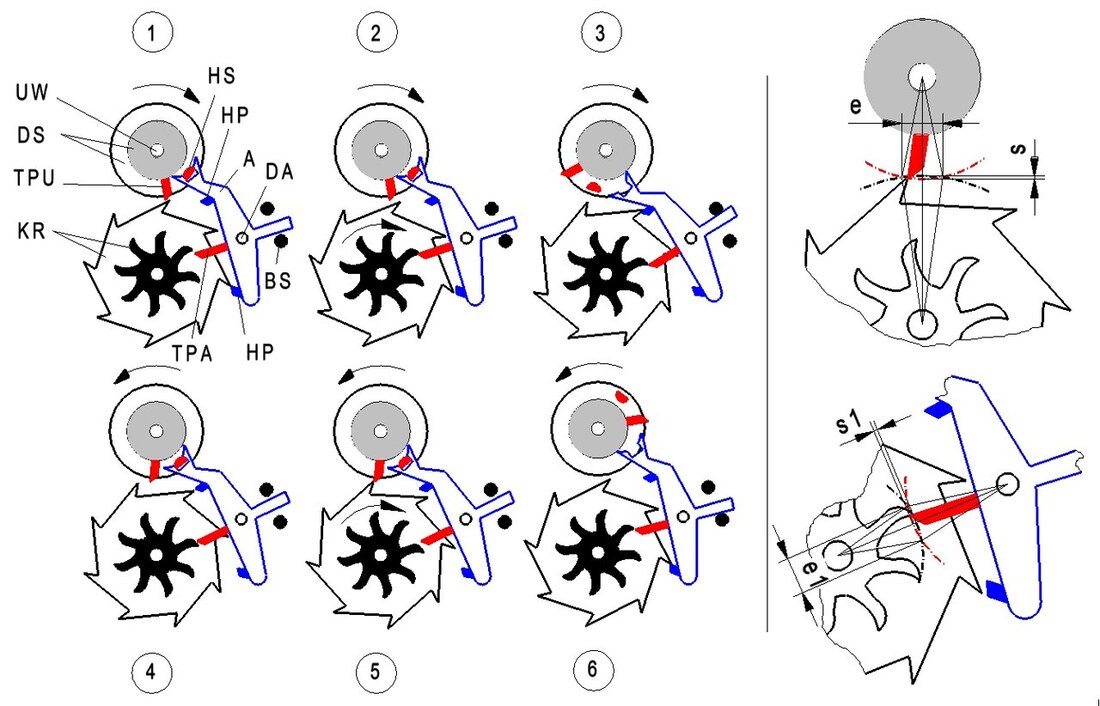
In 1974 Daniels invented the co-axial escapement. The escapement is the part that releases the gear train in measured steps and keeps the watch beating, and the Swiss lever design in near universal use has one significant flaw: its surfaces slide against each other, so it needs lubricant, and as the oil degrades the watch drifts.
Daniels's design replaces most of that sliding with radial pushes, which greatly reduces the friction and therefore the dependence on oil. It was the first fundamentally new practical escapement in roughly two centuries.
He then spent about twenty five years trying to give it away. He demonstrated it across the industry, including to the largest and most prestigious Swiss houses, and was declined. It was finally adopted by Omega, which launched the first co-axial watches in 1999. Daniels remarked that the vindication had arrived roughly twenty years late.
What our own data shows
Here is the part that makes this watch different from everything else in this record book. Daniels's invention exists at both extremes of the market simultaneously, and we can price both.
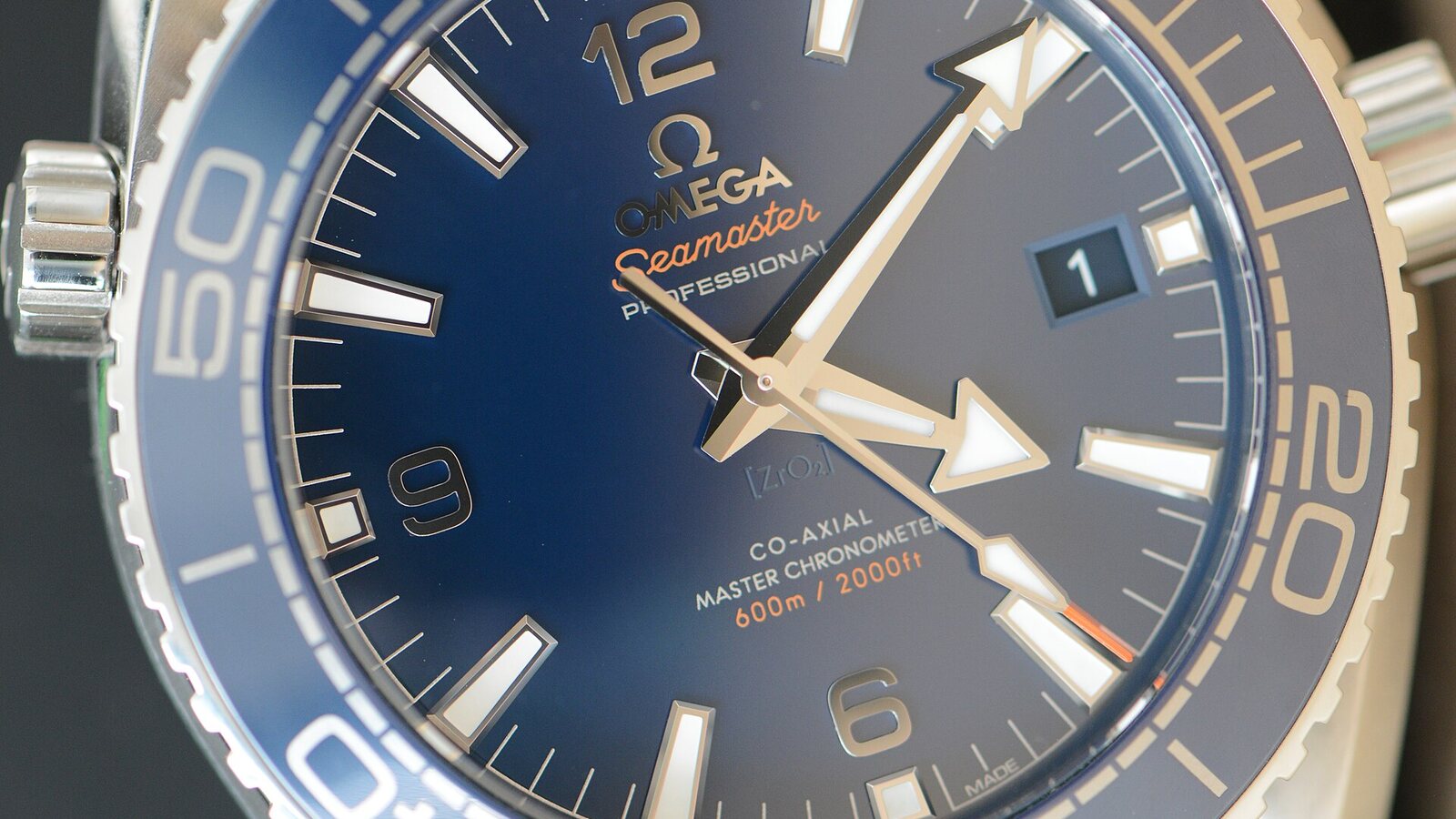
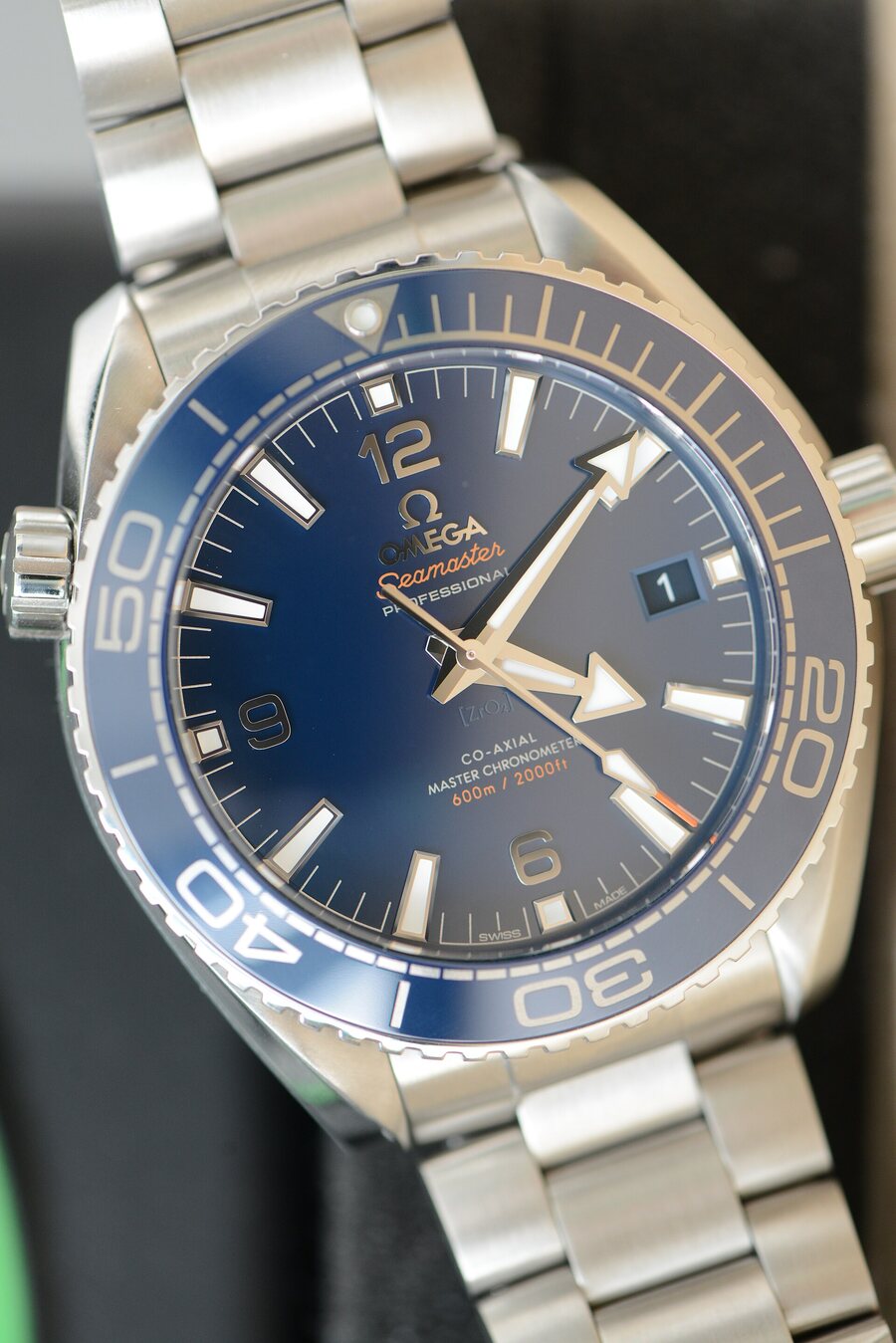
Our archive contains 15 co-axial Omegas sold in dollars. These are ordinary production watches, sold at ordinary auction, carrying the escapement Daniels designed.
| Carrying the Daniels co-axial escapement, sold in USD | Lots | Average |
|---|---|---|
| Omega, series production | 15 | $8,512 |
| Roger Smith, made by hand | 3 | $2,180,900 |
| Space Traveller I, 2019 record | 1 | $4,561,507 |
An Omega carrying the co-axial averages 8,512 dollars in our records, ranging from 1,870 to 25,400. A watch made by hand in the same tradition averages 256 times that. The Space Traveller record is 536 times the average Omega.
Same escapement. Same underlying idea. The entire difference in price is who made the watch around it and how many exist.
That is a cleaner illustration of what this market values than any of the rarity stories elsewhere in this book. The intellectual content of Daniels's career is available for under ten thousand dollars, mass produced, on a diving watch. What is not available at any price is his hand.
The apprentice, and a higher price
Daniels took one apprentice, Roger Smith, who approached him in the 1990s and went on to work with him on the Millennium series before establishing his own workshop. Smith is now the only person continuing the method.
Our archive holds 8 Roger Smith results. The strongest is a Pocket Watch No. 2 that made 4,900,000 dollars at Phillips in 2023, which is more than the Space Traveller's 2019 record.
That is worth stating plainly, because it complicates the usual narrative. The pupil's work has outsold the master's record, in a sale four years later. Whether that reflects the method's continued value, a rising market, or simply which watches happened to come up, our sample cannot say. But it is in the data.
Frequently asked questions
What is the George Daniels Space Traveller I?
A yellow gold pocket watch made by hand in 1982 showing mean solar time, sidereal time, the equation of time, an annual calendar and moon phase. Daniels named it after the Apollo programme.
How much did it sell for?
GBP 3,615,000, roughly 4.56 million dollars, at Sotheby's in London on 2 July 2019, against an estimate of 700,000 to 1,000,000 pounds. It is the most expensive English watch ever sold.
What is the co-axial escapement?
An escapement Daniels invented in 1974 that replaces most of the sliding friction of a Swiss lever escapement with radial impulses, greatly reducing its dependence on lubrication. It was the first practical new escapement in about two centuries.
Why did the Swiss industry reject it?
It was demonstrated across the industry for roughly twenty five years without being taken up, including by the largest houses. Omega adopted it and launched the first co-axial watches in 1999.
How many watches did George Daniels make?
Around twenty three complete watches over his career, each made largely by his own hand across what he counted as thirty two separate trades.
How much is a Daniels watch worth now?
Very few come to market. Our archive records only three Daniels watches sold, the strongest a platinum Anniversary at CHF 1,143,000. His apprentice Roger Smith's work averages 2,180,900 dollars across our three dollar results.
Why it matters
Most record watches are valuable because of scarcity, provenance or an accident of production. The Space Traveller is valuable because of a person's capability, and the price is a statement about how rare that capability is.
The 536 times spread between a production Omega and this pocket watch is the whole argument in one number. Daniels gave the industry his best idea and it took twenty five years to accept it. The market has since decided that the idea, reproduced by machine, is worth a few thousand dollars, and the hand that produced it is worth several million.
Market figures are drawn from TheWatchInfo's auction database, covering sold lots from 2009 to 2026 across the auction houses we track. Sale details for the 2019 record are as published by the auction house.
Image credits
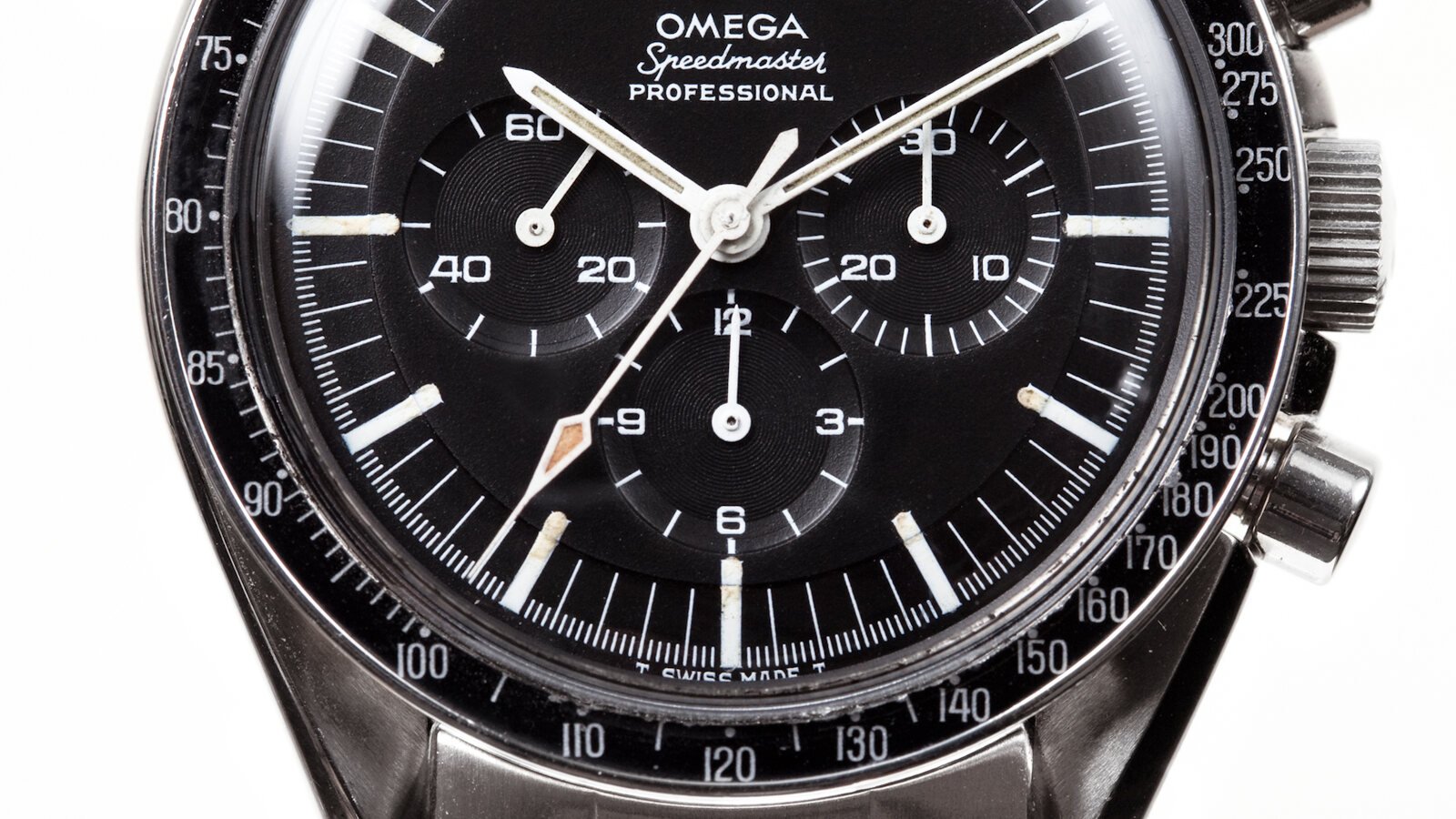
No photograph of the Space Traveller I is available under a licence that permits reuse. This article is illustrated with openly licensed diagrams of the co-axial escapement and photography of production watches carrying it. Each image is hosted by us and credited below.
- Header and production Omega. Photograph by Bjc157, licensed CC BY-SA 4.0.
- Co-axial escapement diagrams. Illustrations by Manfredgoellner, licensed CC BY-SA 4.0.