On 26 October 2017, in New York, a steel Rolex chronograph that had been sitting in a drawer for much of the previous thirty years sold for 17,752,500 dollars. The bidding lasted twelve minutes and opened at 10 million. It remains the most expensive Rolex ever sold at auction.
The watch was a reference 6239 Cosmograph Daytona. Thousands were made. What made this one different was that it had belonged to Paul Newman, that his wife had given it to him, and that the dial fitted to it was the same style collectors had spent thirty years calling a Paul Newman dial because of him. The watch that gave the dial its name came to market, once.
The result, in numbers
| Detail | Record |
|---|---|
| Reference | Rolex Cosmograph Daytona 6239 |
| Made | 1968 |
| Sale | Winning Icons, Phillips New York |
| Date | 26 October 2017 |
| Hammer price | USD 15,500,000 |
| With buyer's premium | USD 17,752,500 |
| Bidding | Twelve minutes, opened at USD 10 million |
| Buyer | Anonymous, by telephone |
| Caseback | Engraved DRIVE CAREFULLY ME |
A significant portion of the proceeds went to the Nell Newman Foundation, named for Newman's daughter.
The gift, and the inscription
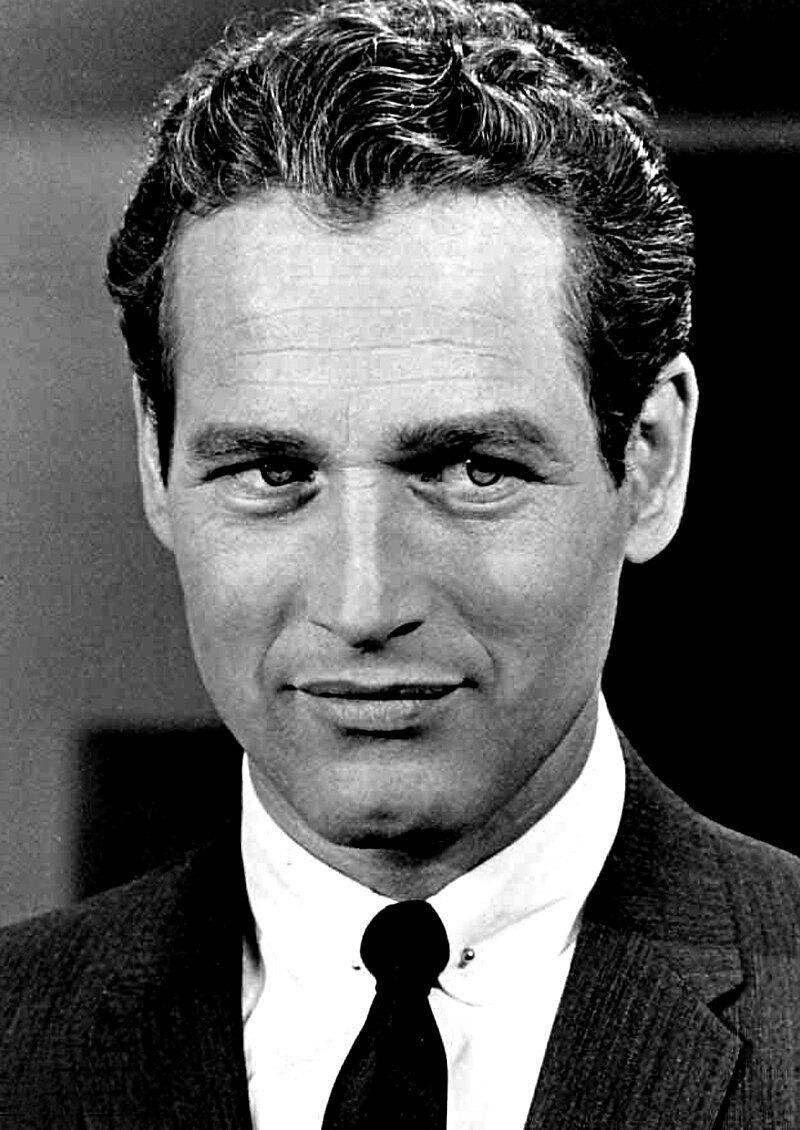
Paul Newman took up motor racing in his forties, after learning to drive competitively for the 1969 film Winning. He was good at it. He raced professionally into his seventies and finished second at Le Mans in 1979.
His wife, the actress Joanne Woodward, was reportedly less enthusiastic about the hobby. She gave him a Rolex Cosmograph Daytona, a chronograph built for timing races, and had the caseback engraved with three words: DRIVE CAREFULLY ME.
That inscription is a large part of why the watch sold for what it did. Without it the piece is a well-provenanced celebrity Daytona. With it, it is a specific message from one named person to another, permanently attached to the object, and impossible to replicate.
How the watch left the family
The provenance is unusually well documented, and unusually casual. In 1984 Newman gave the watch to James Cox, who was then dating his daughter Nell. Cox has recounted that Newman handed it over with the words that it would tell pretty good time if he wound it.
Cox kept it for thirty three years. The watch was not lost, hidden or forgotten so much as simply owned by a private person who had no particular reason to sell. He consigned it in 2017, and directed a substantial share of the proceeds to Nell Newman's foundation.
What an exotic dial actually is
Rolex never used the term Paul Newman. In period catalogues the dial was called an exotic dial, an alternative option produced with the dial maker Singer from the early 1960s, and it sold poorly. Dealers reportedly struggled to move them.
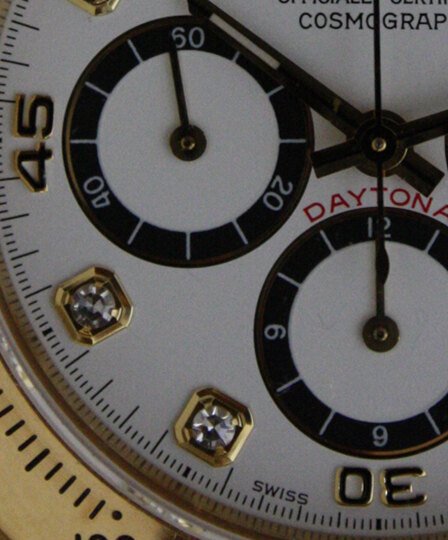
Three features distinguish it from a standard Daytona dial:
- A stepped, contrasting minute track around the outer edge, rather than a flat printed one
- Art deco numerals in the three chronograph sub-registers, with small square markers at the ends of the graduations
- A different colour scheme, typically with red accents on the chapter ring, giving the two-tone or three-tone look collectors describe
The nickname arrived much later. Newman was photographed wearing his exotic-dial 6239 repeatedly through the 1970s and 1980s, and by the time the vintage market matured the dial had acquired his name. It is a collector's term that stuck, not a manufacturer's designation, and the watch sold in 2017 is the reason it exists.
The reference itself
The 6239 was the first Cosmograph, introduced in 1963. It moved the tachymetre scale off the dial and onto the steel bezel, which is the design decision that still defines the Daytona today.
- Movement. A Valjoux 72, finished and adjusted by Rolex and designated calibre 722, later 722-1. Manually wound, column wheel, 17 jewels, 18,000 vibrations an hour.
- Case. Steel, 37 mm, with screw-down pushers arriving on later references rather than this one.
- Naming. Early examples did not carry Daytona on the dial at all. The name appeared from around 1965.
Roughly two to three thousand exotic dials are thought to have been produced across all the Daytona references that used them. That is scarce, but it is not unique, which is what makes the price of this particular example worth examining.
What our own data shows
This is the first of the great record watches where we hold a meaningful set of comparable sales. Our archive contains 50 sold examples of reference 6239, from 2010 to 2026, alongside 636 Daytonas and 4,724 Rolex results overall.
Splitting those 6239 sales by dial type, using dollar results only so the comparison is like for like, produces the clearest number in this article.
| Reference 6239, sold in USD | Lots | Average | Range |
|---|---|---|---|
| Exotic, the Paul Newman dial | 7 | $379,754 | $155,100 to $1,079,500 |
| Standard dial | 9 | $49,829 | $33,280 to $74,800 |
The same reference, the same movement, the same case, the same year range. The exotic dial carries a 7.6 times premium. Nothing else about the watch changes. The entire difference is a printed dial that Rolex struggled to sell when it was new.
Across all currencies we hold 18 exotic-dial 6239 results and 32 standard ones. The strongest exotic-dial 6239 in our records made 1,079,500 dollars at Phillips against an estimate of 600,000 to 1,200,000.
Set that against the 2017 record. Newman's own watch sold for 16.4 times our best comparable exotic-dial 6239, and roughly 47 times the average one. The dial explains a 7.6 times premium. Everything above that is the engraving on the back and the name of the man it belonged to.
Frequently asked questions
How much did Paul Newman's Rolex Daytona sell for?
17,752,500 dollars including buyer's premium, on a hammer price of 15.5 million, at Phillips in New York on 26 October 2017. It is the most expensive Rolex ever sold at auction.
What is a Paul Newman Daytona?
A Rolex Cosmograph Daytona fitted with what Rolex called an exotic dial: a stepped minute track, art deco numerals in the sub-registers and a contrasting colour scheme. Collectors named it after Paul Newman because he wore one for years. Rolex never used the term.
Why is the Paul Newman dial worth so much more?
Scarcity and recognition. Only about two to three thousand were made, because the design sold badly when new. In our own records the exotic dial commands an average of 379,754 dollars against 49,829 for a standard dial on the same reference, a premium of 7.6 times.
What does the caseback say?
DRIVE CAREFULLY ME. It was engraved for Joanne Woodward, who gave the watch to her husband when he took up motor racing.
How did the watch come to auction?
Newman gave it to James Cox in 1984, when Cox was dating his daughter Nell. Cox kept it for thirty three years before consigning it, and directed a significant portion of the proceeds to the Nell Newman Foundation.
What movement does the 6239 use?
A Valjoux 72 that Rolex finished and adjusted, designated calibre 722 and later 722-1. It is manually wound, uses a column wheel, has 17 jewels and beats at 18,000 vibrations an hour.
Why this sale mattered
The Supercomplication and the Grandmaster Chime were extraordinary objects that cost extraordinary sums, which is a story that makes intuitive sense. This watch is different. It is a mass-produced steel sports chronograph, mechanically identical to hundreds of others, and it sold for more than any Rolex before or since.
What it proved is that provenance can be worth more than the object. Our own figures put a number on the part that is about the watch: 7.6 times for the dial. The remaining multiple is about a person, a marriage, three engraved words and a gift passed on without ceremony in 1984. None of that is manufacturable, which is exactly why it does not appear in any other 6239 result we hold.
Market figures are drawn from TheWatchInfo's auction database, covering sold lots from 2009 to 2026. Sale details for the 2017 record are as published by the auction house.
Image credits
No photograph of Paul Newman's own 6239 is available under a licence that permits reuse, so this article is illustrated with openly licensed photography. Each image is hosted by us and credited below.
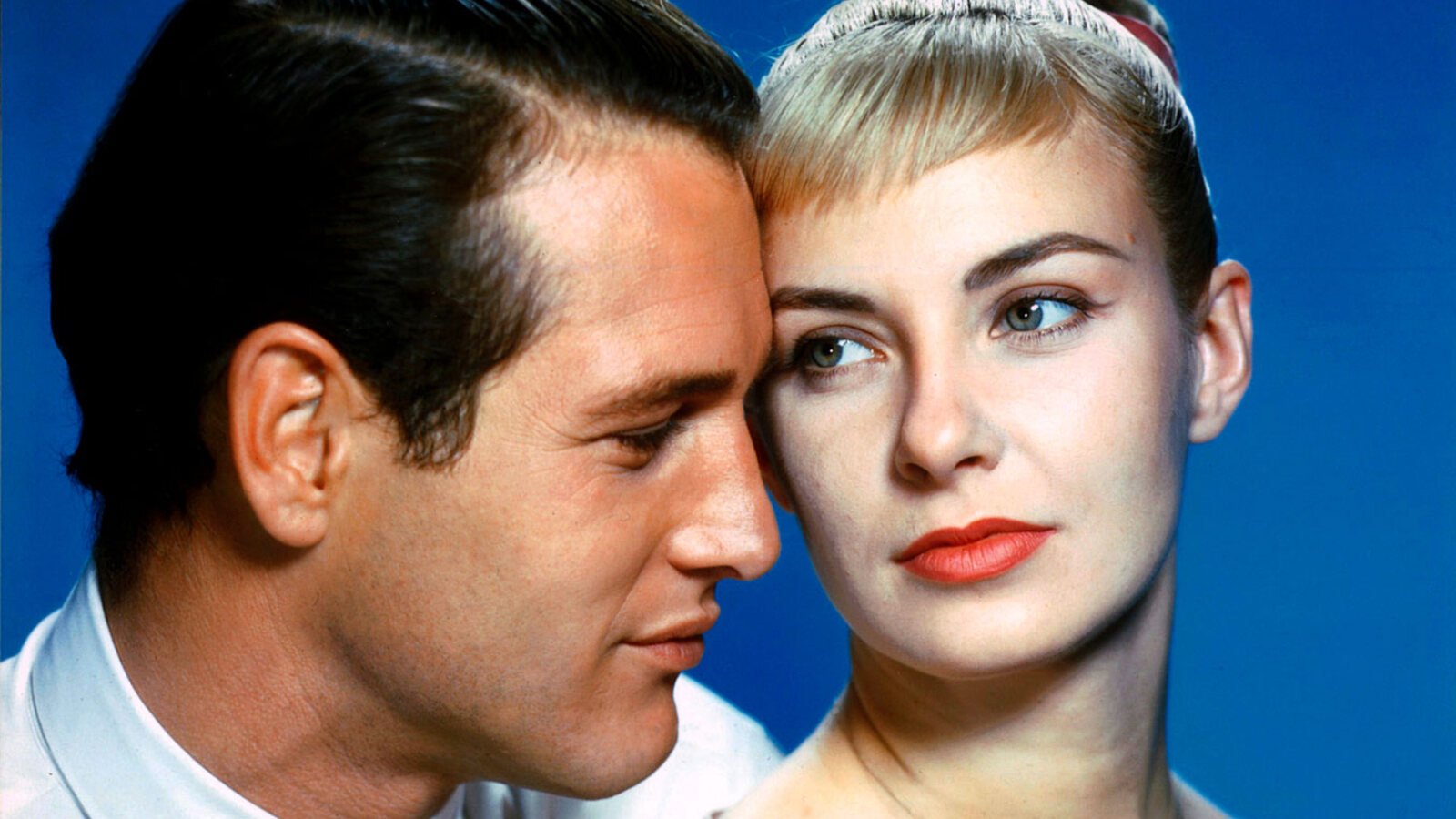
- Header. Paul Newman and Joanne Woodward, 1958. Studio photograph by 20th Century Fox, public domain.
- Portrait. Paul Newman, 1963. Studio photograph by MGM, public domain.
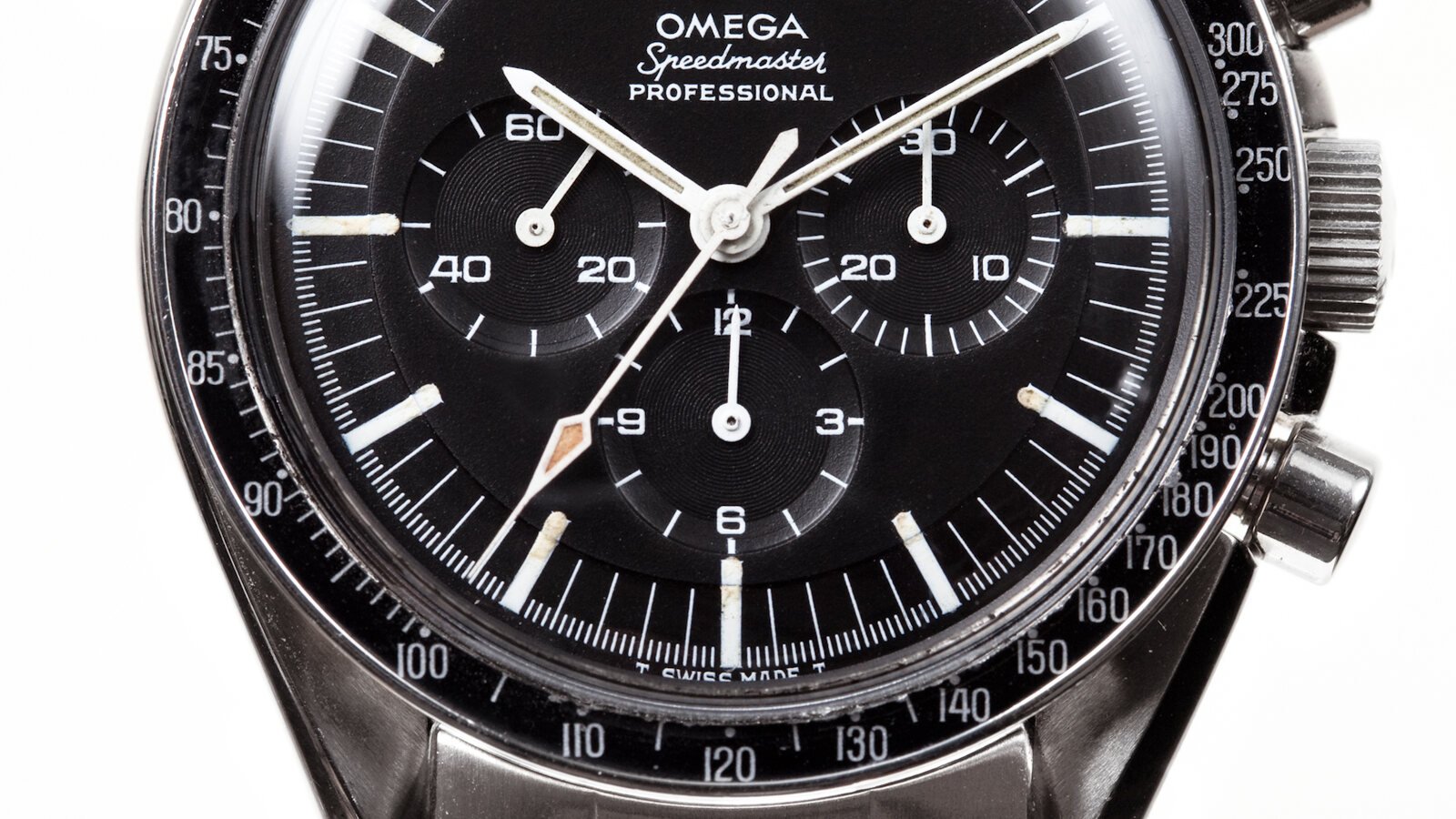
- Sub-dial and case details. Photographs of later Daytona references by Alesili, licensed CC BY-SA 3.0.