In November 2016 a steel Patek Philippe reference 1518 sold in Geneva for 11,002,000 Swiss francs. It was the first wristwatch in history to pass eight figures at auction, and for a year it was the most expensive wristwatch ever sold.
In November 2025 the same watch came back. Case number 508'473, with the digit 1 stamped beneath it, marking it as the first steel 1518 ever built. It sold again, in the same city, through the same auction house, for 14,190,000 Swiss francs.
Two documented sales of one object, nine years apart. That is rare enough in this market to be worth more attention than the headline price, because it turns a famous watch into something almost no watch is: a measurable investment with a start date, an end date and a return.
The two sales, in numbers
| Detail | Record |
|---|---|
| Reference | Patek Philippe 1518, stainless steel |
| Made | 1943 |
| Case number | 508'473, stamped 1 beneath |
| Movement number | 863'193 |
| First sold to | Joseph Lang, Budapest, 22 February 1944 |
| 2016 sale | Phillips Geneva, November 2016, CHF 11,002,000 |
| 2025 sale | Phillips Geneva, 8 November 2025, lot 23, CHF 14,190,000 |
| 2025 estimate | In excess of CHF 8,000,000 |
| Gain across nine years | 29 percent, about 2.9 percent a year |
The 2016 result was the first eight-figure wristwatch. The 2025 result is, on our reading of exchange rates at the time, worth roughly 17.6 million dollars, which places it among the highest prices ever paid for a wristwatch.
Why steel is the whole story
Patek Philippe made 281 examples of the reference 1518 across a production run from 1941 to 1954. Almost all were yellow gold. Around 55 were pink gold.
Four were steel. That is 1.4 percent of the run.
The logic is the same one that made the Grandmaster Chime the most expensive watch in the world in 2019, and it is the single most reliable driver of extreme prices in this market. A manufacture known for precious metal produces a tiny number of examples in the least precious material it works with, and those become the ones collectors cannot replace. Steel was, at the time, the cheap option. It is now the expensive one by a factor no gold example approaches.
What the 1518 actually was
The reference matters beyond its rarity. Launched in 1941, in the middle of the war, the 1518 was the world's first serially produced perpetual calendar chronograph wristwatch. Complicated watches before it were one-off commissions. This was a catalogue model that anyone with the money could order, combining two of the hardest complications in one 35 mm case.
- Movement. Calibre 13-130 Q, built on a Valjoux 23 chronograph ebauche, finished and adjusted by Patek Philippe, with the perpetual calendar module supplied by Victorin Piguet.
- Specification. Manually wound, 23 jewels, roughly 42 hours of power reserve.
- Case. 35 mm, made by Georges Croisier.
- Functions. Chronograph, perpetual calendar with day, date and month, moon phase, and a 24 hour indication.
Every perpetual calendar chronograph that followed, from any manufacture, descends from this layout. That is why the 1518 carries weight that a rarity alone would not justify.
What our own data shows
Our archive holds 15 sold examples of reference 1518, all through the same auction house, from 2023 to 2026. That is a small population, which is exactly what you would expect from a reference with 281 examples in total, but it is enough to measure the steel premium directly.
Comparing in Swiss francs only, so the comparison is like for like:
| Reference 1518, sold in CHF | Lots | Result |
|---|---|---|
| The steel example | 1 | CHF 14,190,000 |
| All other examples | 7 | Average CHF 1,086,800 |
The steel example sold for about 13 times the average of every other 1518 in our records. Same reference, same movement, same complications, same 35 mm case. The difference is the metal, and the fact that only three others like it are known to exist.
The next strongest 1518 we hold is a pink-on-pink example at CHF 3,569,000, and the range across the remaining gold examples runs from CHF 533,400 to CHF 876,300. In other words, an ordinary gold 1518 is a high six-figure to low seven-figure watch. The steel one is in a different market entirely.
A note on our own record book. Our landmark table now carries both figures for this watch: the 2016 result of 11.1 million dollars that made it the first eight-figure wristwatch, and the 2025 result of 17.6 million. We added a field for exactly this, because a landmark price is the moment a record was set, not a current valuation, and overwriting one with the other would lose half the story.
What the nine-year gap tells us
Most watches at this level trade privately, or once in a generation, which makes claims about watches as investments hard to test. This one is different. Two public sales of the same object, both through the same house, both in Geneva, nine years apart:
- 2016: CHF 11,002,000
- 2025: CHF 14,190,000
- Gain: 29 percent
- Compound annual return: about 2.9 percent a year
That is a real return, and it is a good deal less dramatic than the way record prices are usually discussed. It is roughly in line with inflation over the period. The 2025 sale was a strong result against an estimate in excess of 8 million, and it still produced a single-digit annual return, because the 2016 price had already been a record.
The lesson is not that the watch was a poor holding. It is that buying at a record price and selling nine years later at another record price produced a modest return, which is a more honest picture of the top of this market than a headline number in isolation.
Frequently asked questions
How many steel Patek Philippe 1518s exist?
Four are publicly known, out of 281 examples of the reference made in total between 1941 and 1954. The rest are yellow gold, with around 55 in pink gold.
How much did the steel 1518 sell for?
CHF 11,002,000 in November 2016, then CHF 14,190,000 in November 2025. Both sales were at Phillips in Geneva, and both were of the same watch.
What makes the reference 1518 historically important?
It was the world's first serially produced perpetual calendar chronograph wristwatch, launched in 1941. Before it, watches this complicated were individual commissions rather than catalogue models.
What movement does the 1518 use?
Calibre 13-130 Q, based on a Valjoux 23 chronograph ebauche finished by Patek Philippe, with a perpetual calendar module from Victorin Piguet. It is manually wound, has 23 jewels and runs about 42 hours.
Why is steel worth more than gold here?
Scarcity. Gold examples are the standard production; steel ones are the anomaly. In our own records the steel example sold for roughly 13 times the average of the other 1518s we have tracked.
Was it a good investment?
Modestly. From CHF 11,002,000 in 2016 to CHF 14,190,000 in 2025 is a gain of 29 percent, about 2.9 percent a year compounded, before any costs of sale.
Why it matters
The 1518 is the watch that made the perpetual calendar chronograph an ordinary thing to own, if you could afford one. Every watch in that category since is built on the template it set in 1941.
The steel example is something else again: a manufacturing accident of sorts, four watches that should not really exist, made in the wrong metal at the wrong moment in a war. Two of its public sales are on the record, and between them they say something more useful about this market than any single price does. Extreme rarity produces extreme prices. It does not necessarily produce extreme returns.
Market figures are drawn from TheWatchInfo's auction database, covering sold lots from 2009 to 2026. Sale details are as published by the auction house.
Image credits
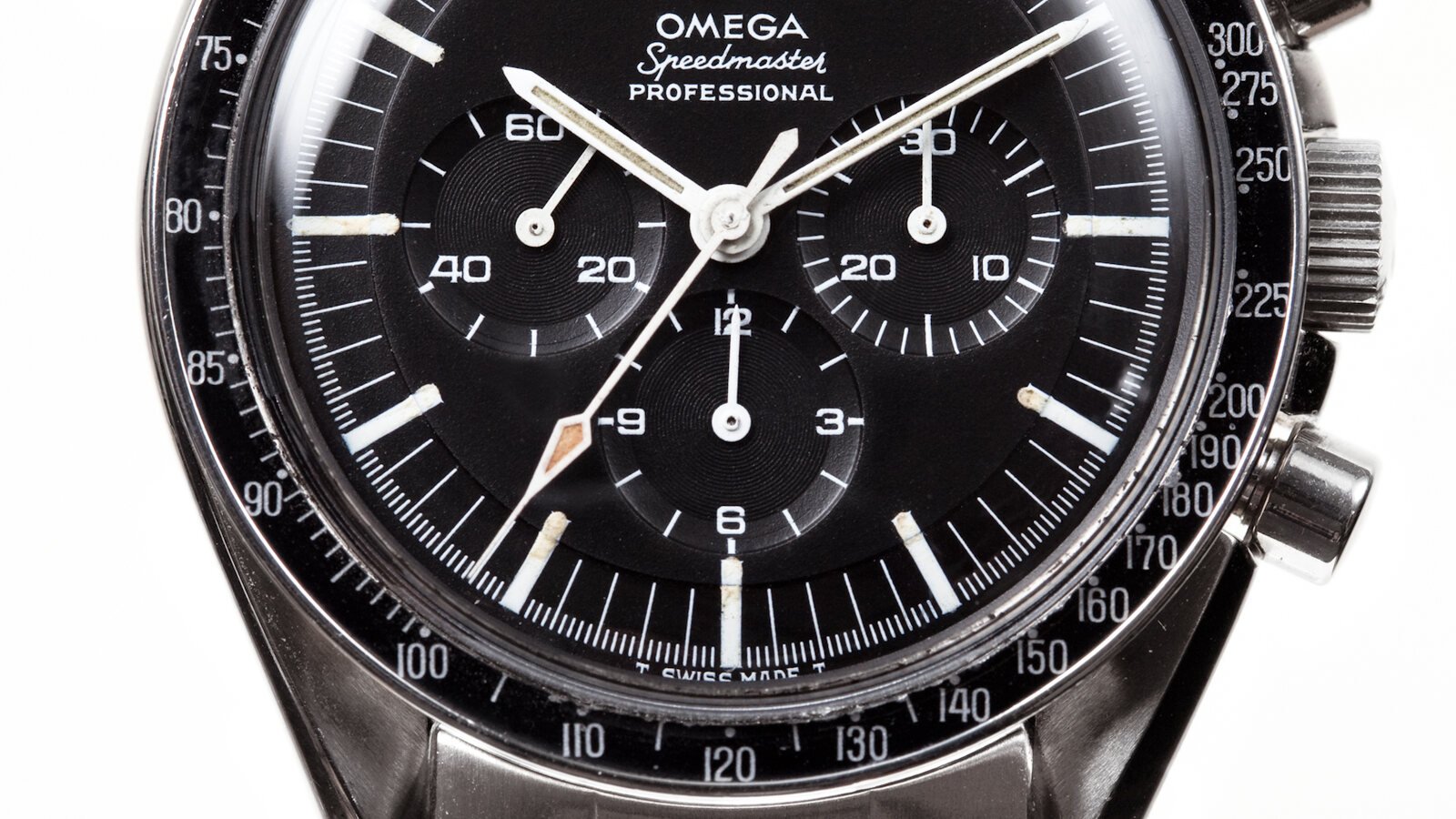
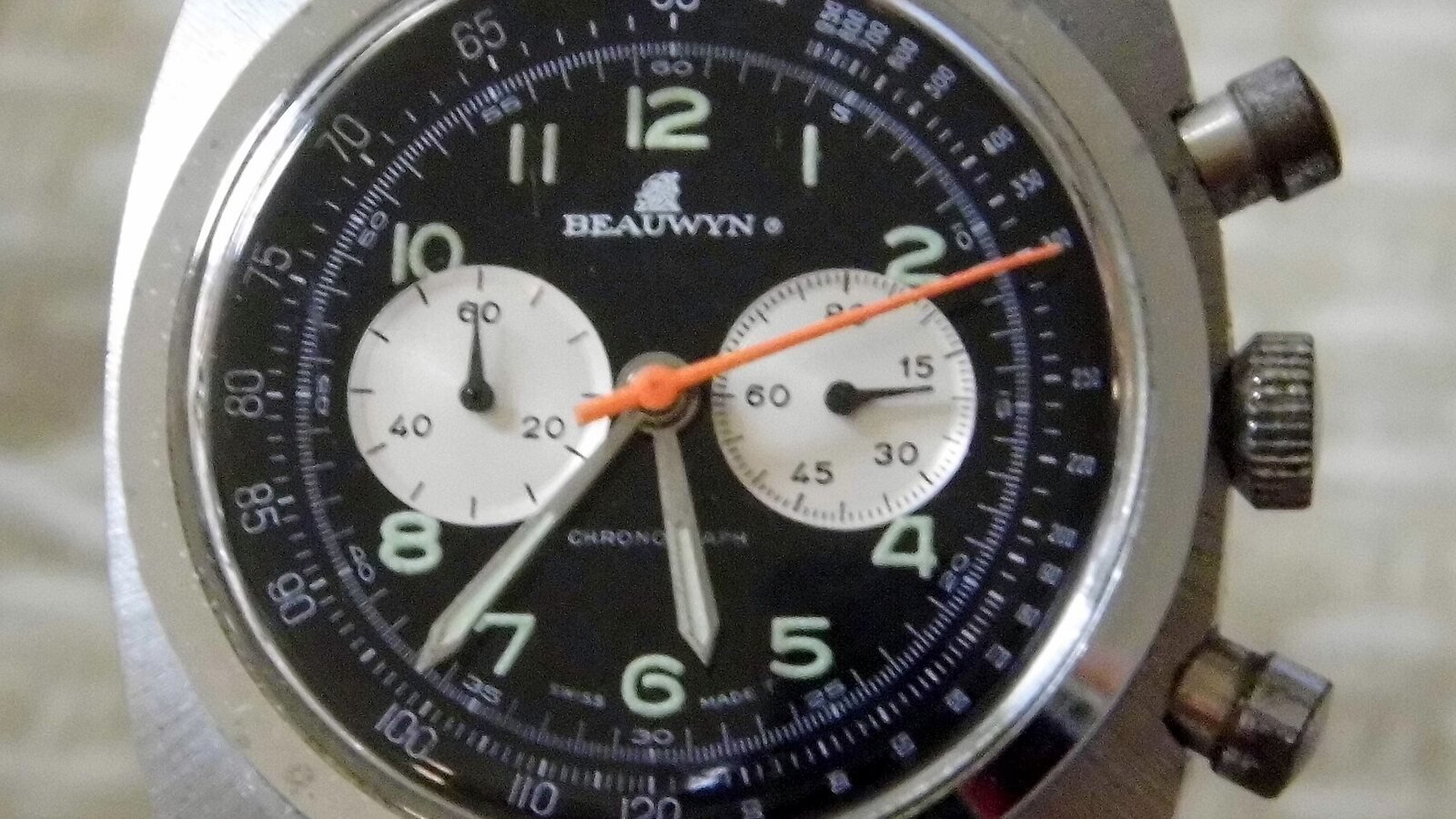
No photograph of the steel reference 1518 is available under a licence that permits reuse, so this article is illustrated with openly licensed photography of comparable period chronographs. Each image is hosted by us and credited below.
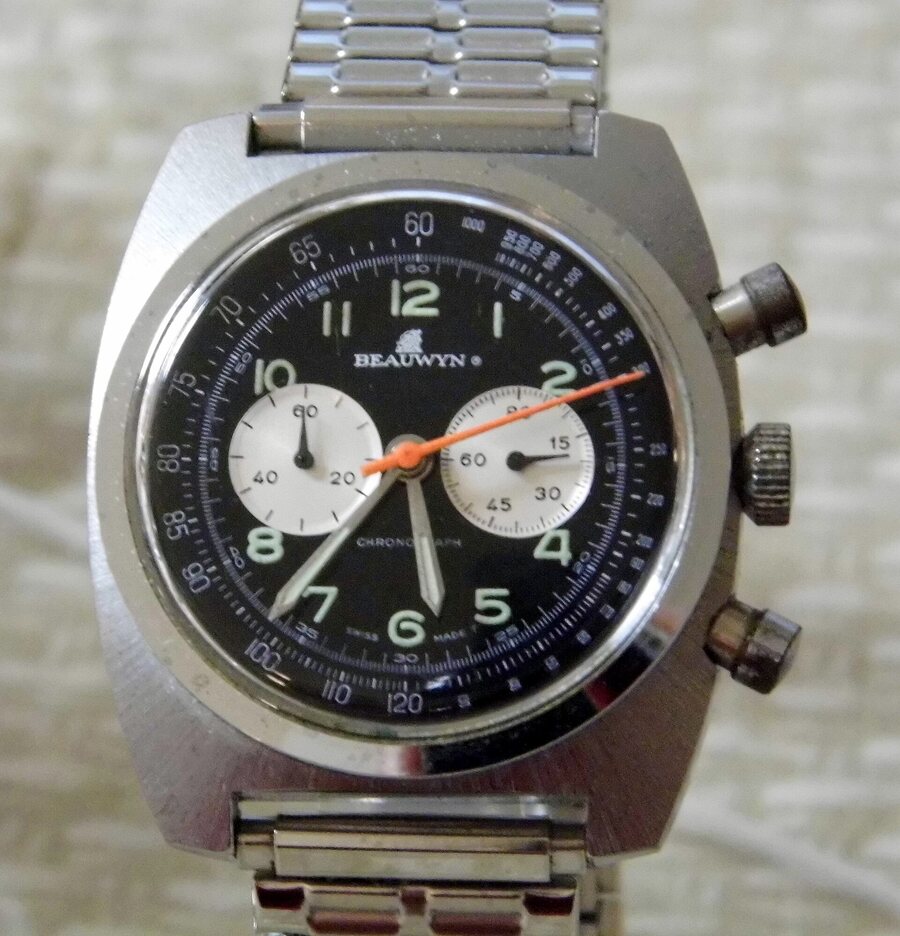
- Header and dial. A vintage Swiss manual-wind steel chronograph. Photograph by Joe Haupt, licensed CC BY-SA 2.0.
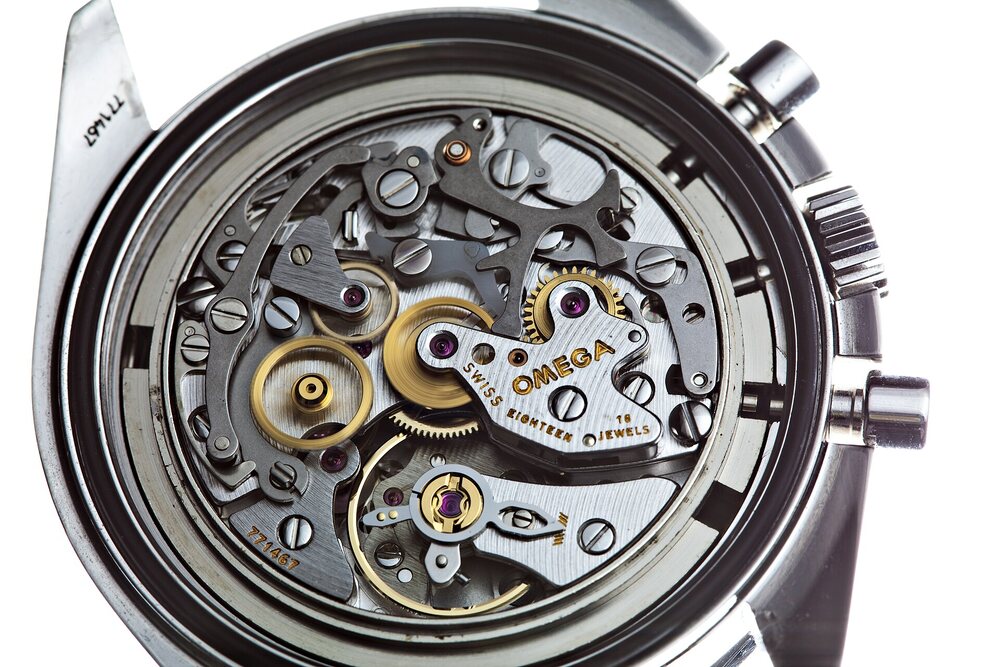
- Movement. A manually wound chronograph movement. Photograph by Shane Lin, licensed CC BY-SA 2.0.