On 11 November 2014, in Geneva, a gold pocket watch the size of a small apple sold for 23,237,000 Swiss francs, about 24 million dollars. It was the second time the same watch had broken the world auction record. The first was in 1999, when it made 11,002,500 dollars in New York and roughly doubled the previous high for any timepiece.
The Henry Graves Supercomplication is the most complicated watch ever made without the aid of a computer. It holds 24 complications in 920 parts, took eight years to design and build, and was finished in 1933. For most of the following century it was the most valuable watch in the world, and it is still the most valuable pocket watch by a wide margin.
The result, in numbers
| Detail | Record |
|---|---|
| Maker | Patek Philippe |
| Commissioned | 1925, by Henry Graves Jr. |
| Delivered | 19 January 1933 |
| Original price | CHF 60,000, about USD 15,000 at the time |
| Complications | 24 |
| Parts | 920, including 430 screws and 110 wheels |
| Jewels | 70 |
| Case | 18 carat gold, 74 mm across, 36 mm thick |
| Weight | 536 grams, of which 250 grams is the case |
| First auction | 2 December 1999, Sotheby's New York, USD 11,002,500 |
| Second auction | 11 November 2014, Sotheby's Geneva, CHF 23,237,000 |
The 2014 result was about 1,600 times what Graves paid for it, and it stood as the world record for any watch until 2019.
Who Henry Graves was
Henry Graves Jr. was a New York banker, heir to a railroad and banking fortune, and one of the two most demanding watch collectors of his era. He did not commission watches to wear them so much as to see how far the craft could be pushed. Between them, Graves and the automobile manufacturer James Ward Packard ordered some of the most complicated timepieces of the early twentieth century.
Graves placed the order in 1925. Patek Philippe spent three years designing the movement and five more building it, and delivered it on 19 January 1933. He paid 60,000 Swiss francs, around 15,000 dollars, at a moment when the Depression had made that an extraordinary sum.
A rivalry that may never have happened
The story usually told is that Graves and Packard were locked in a contest to own the most complicated watch in the world, and that the Supercomplication was Graves winning it. It is a good story, and it is repeated almost everywhere.
It is also, most likely, untrue. There is no evidence the two men ever met, and the rivalry appears to have been introduced in the early 1990s, attributed to a former Patek Philippe director, around the promotion of another very complicated watch. What is documented is that both men were serious clients of the same manufacture at the same time, and that each commissioned exceptional pieces. The duel between them belongs to marketing rather than to the record.
The watch does not need it. A privately commissioned object that took eight years and 920 parts is remarkable on its own terms, and the invented rivalry has arguably obscured a better question: what does a client actually ask for when money is not the constraint?
What the 24 complications do
The answer, in Graves's case, was almost everything a mechanical movement could be made to do in 1933. The watch has two dials, front and back, because 24 indications will not fit on one face.
Timekeeping and astronomy
- Mean solar time, the ordinary time of day
- Sidereal time, the time by which astronomers track the stars, on its own separate gear train
- Equation of time, the difference between clock time and true solar time
- Times of sunrise and sunset, calculated for one specific place
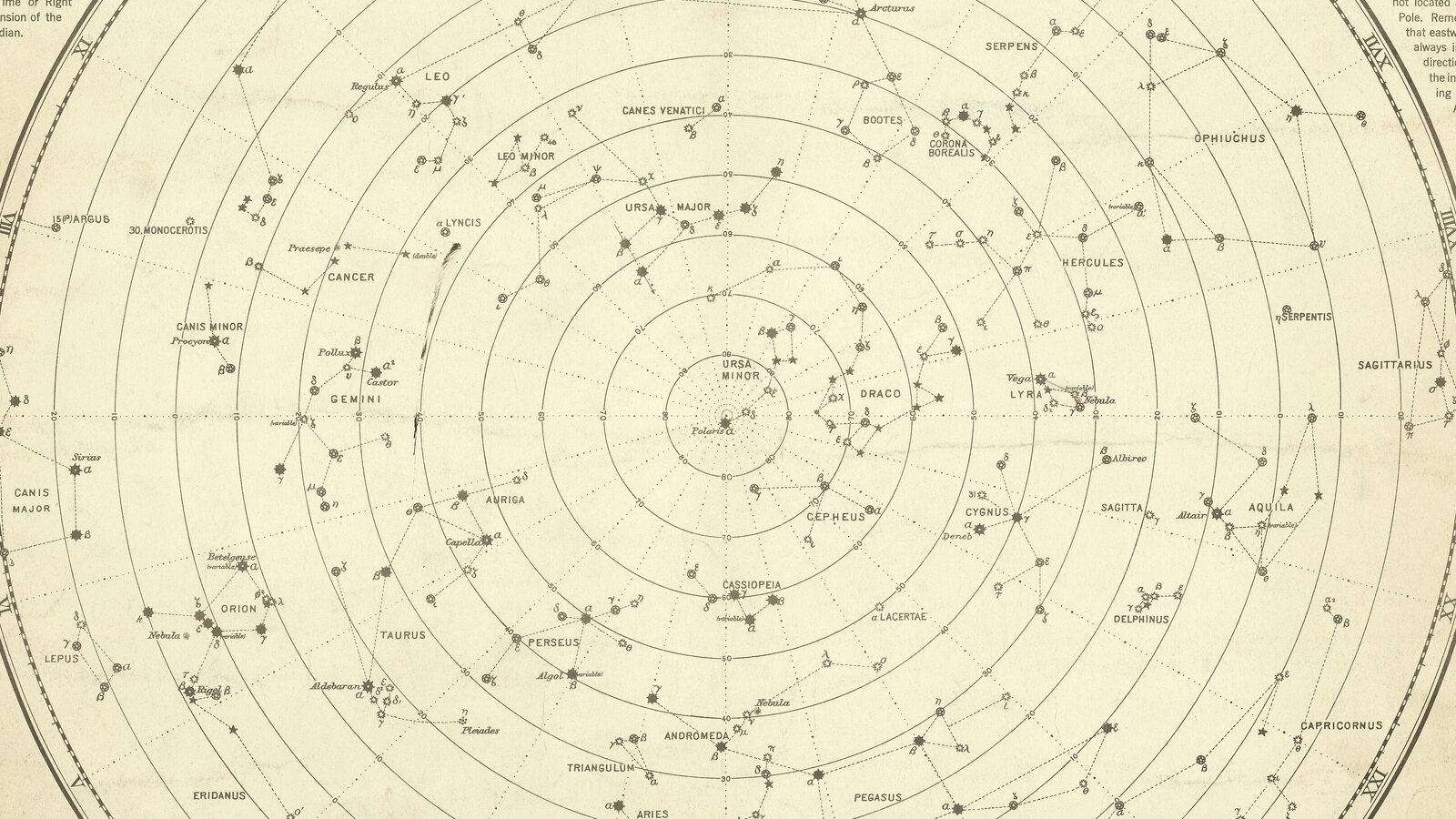
- A rotating celestial chart of the night sky as seen from Graves's apartment on Fifth Avenue in New York
Calendar
- Perpetual calendar, correct through to the year 2100
- Day, date and month, each by hand
- Moon phases
Chiming
- Minute repeater sounding Westminster chimes, the same sequence as the bells of the Palace of Westminster
- Grande sonnerie, striking hours and quarters automatically
- Petite sonnerie
- Alarm
Chronograph and the rest
- Split-seconds chronograph, for timing two events at once
- 60 minute and 12 hour recorders
- Two separate power reserve indicators, one for the going train and one for the strike
The celestial chart is the detail that says the most. It is not a generic star map. It shows the sky over one address in Manhattan, which means the watch was calculated for a single owner standing in a single place, and is of no use to anyone anywhere else.
Where it went afterwards
Graves died in 1953 and the watch passed through his family. His daughter Gwendolen transferred it to her son, Reginald Fullerton, in 1960. In 1969 Fullerton sold it for 200,000 dollars to Seth Atwood, an industrialist who was assembling what became the Time Museum in Rockford, Illinois. It sat on public display there until the museum closed in 1999.
That closure sent it to Sotheby's in New York on 2 December 1999, where it made 11,002,500 dollars and set the world record. The buyer was a member of the Qatari royal family. Between 2001 and 2005 it was exhibited at the Patek Philippe Museum in Geneva. It returned to Sotheby's in 2014 and set the record a second time.
Two documented sale prices fifteen years apart make this one of the very few watches in the world with a measurable long-run return. From 11,002,500 dollars in 1999 to about 24 million in 2014 is a gain of roughly 118 percent, or about 5.3 percent a year compounded.
What our own data says about pocket watches
The Supercomplication has come to market twice in ninety years, so it cannot be valued from comparable sales. What our archive can show is the market it sits at the very top of.
We hold 331 pocket watch results sold in dollars, and 133 Patek Philippe pocket watches across all currencies, spanning 2009 to 2026. The pattern in them is consistent and slightly counterintuitive.
| Sold in USD | Lots | Average | Highest |
|---|---|---|---|
| Pocket watches | 331 | $22,004 | $4,900,000 |
| Wristwatches | 8,060 | $43,784 | $13,922,000 |
The average pocket watch sells for about half what the average wristwatch does, and there are roughly twenty-four times as many wristwatches crossing the block. On volume and on typical price, the pocket watch is the smaller, quieter market. Yet the highest price ever paid for any watch belonged to a pocket watch for twenty years, and this one still holds the pocket watch record by a distance no wristwatch approached until 2019.
That gap is the point. Pocket watches are not generally worth more than wristwatches; almost all of them are worth considerably less. What the Supercomplication demonstrates is that at the very top the ordinary market stops applying. The 2014 result is roughly 1,090 times our average pocket watch result, and 4.9 times the highest pocket watch price we have recorded in seventeen years of sales.
Frequently asked questions
What is the Henry Graves Supercomplication?
A gold pocket watch made by Patek Philippe for the New York banker Henry Graves Jr., commissioned in 1925 and delivered in 1933. It has 24 complications and 920 parts, and was the most complicated watch in the world for decades.
How much did it sell for?
It has sold twice at auction. In December 1999 it made 11,002,500 dollars at Sotheby's in New York. In November 2014 it made 23,237,000 Swiss francs, about 24 million dollars, at Sotheby's in Geneva.
Is it still the most expensive watch ever sold?
No. It held the record from 2014 until November 2019, when a stainless steel Patek Philippe Grandmaster Chime sold for 31 million Swiss francs. The Supercomplication remains the most expensive pocket watch ever sold.
How many complications does it have?
Twenty-four, including a minute repeater with Westminster chimes, grande and petite sonnerie, a split-seconds chronograph, a perpetual calendar good to 2100, sidereal time, the equation of time, sunrise and sunset times, and a chart of the night sky over New York.
Did Henry Graves really have a rivalry with James Ward Packard?
Probably not in the way the story is usually told. There is no evidence the two men met, and the rivalry appears to have been introduced as a promotional narrative in the early 1990s. Both were significant clients of the same manufacture, which is the documented part.
How long did it take to make?
Eight years in total. Three years of design followed by five years of manufacture, from the 1925 commission to delivery on 19 January 1933.
Why it still matters
The Supercomplication marks the end of a particular way of making things. It was designed and built entirely by hand, without computer modelling, by people calculating gear trains on paper. Patek Philippe has since built more complicated watches, but it built them with tools that did not exist in 1933.
It is also a record of what one person wanted. The sky chart is set for one window in Manhattan. The Westminster chime was chosen because Graves liked it. Eight years of work by a Geneva manufacture went into an object that answered to a single client's taste, and the result outlived him by seventy years and sold for 1,600 times what he paid.
Market figures are drawn from TheWatchInfo's auction database, covering sold lots from 2009 to 2026. Details of the watch and its sales are as published by the auction house and the manufacture.
Image credits
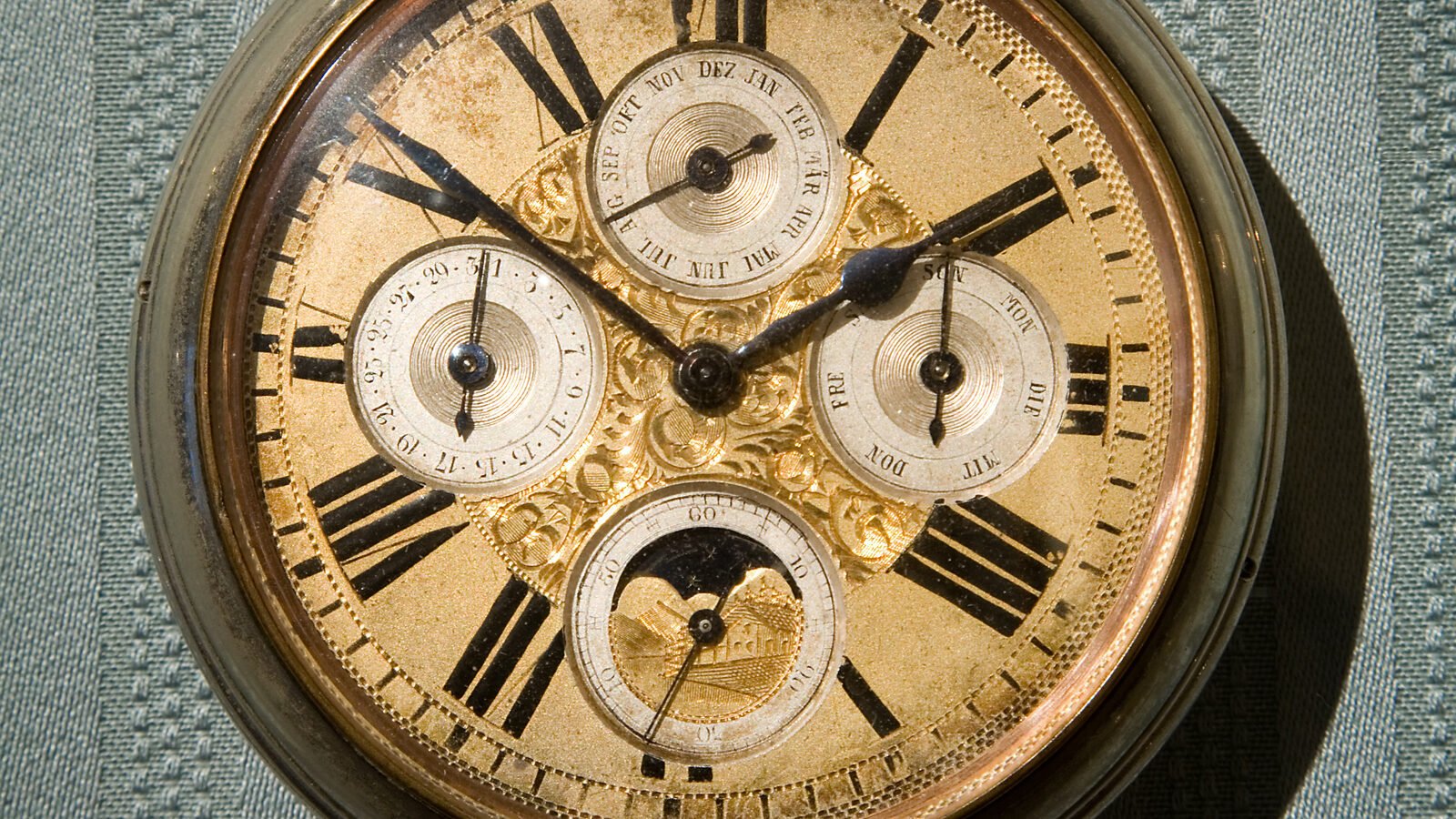
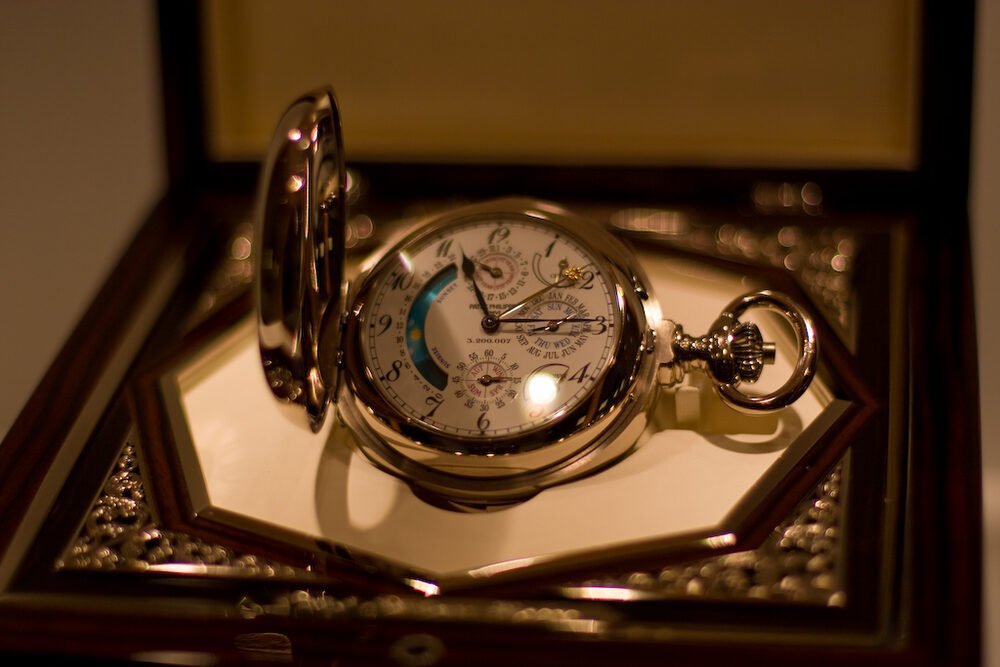
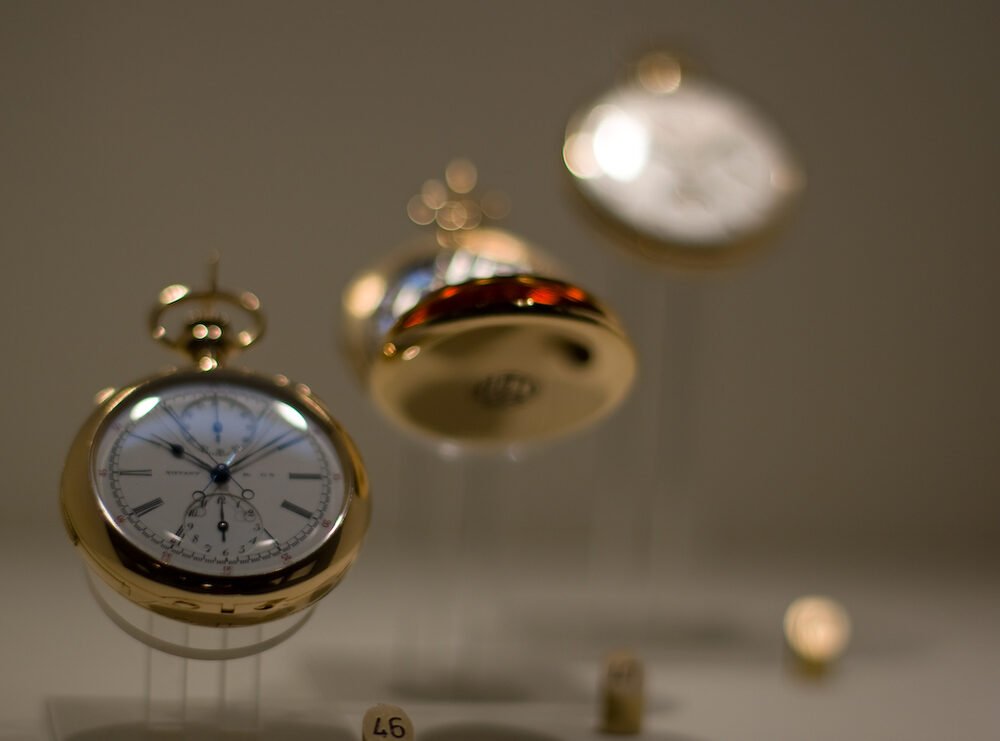
No photograph of the Henry Graves Supercomplication is available under a licence that permits reuse, so this article is illustrated with openly licensed photography of comparable period pocket watches. Each image is hosted by us and credited below.
- Header and dial detail. A vintage calendar pocket watch with moon phase. Photograph by Jorge Royan, licensed CC BY-SA 3.0.
- Cased pocket watch and collection views. Patek Philippe watches photographed in New York by Kamal Aboul-Hosn, licensed CC BY 2.0.