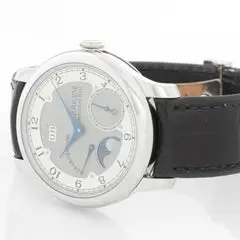
The mechanical watch movement is a marvel of precision engineering, embodying the skill of centuries of horological craftsmanship. Every component interacts seamlessly, transforming energy stored in the mainspring into the rhythmic ticking of a watch. Understanding how these components work together not only enhances appreciation for this art form but also sheds light on the complexity behind even the simplest of timepieces.
The Basics of Mechanical Watch Movements
A mechanical watch movement, often called a 'caliber', operates without the need for batteries. Instead, it relies on a tightly wound mainspring that provides energy through a series of intricate components. This traditional form of timekeeping has seen a resurgence in popularity as enthusiasts rediscover the artistry and mechanical ingenuity behind watchmaking.
The two primary types of mechanical movements are manual and automatic. Manual movements require the wearer to wind the mainspring regularly, while automatic movements, like the Rolex Caliber 3135, utilize the motion of the wearer’s wrist to wind the mainspring automatically. This blend of artistry and engineering is what sets mechanical watches apart from their quartz counterparts.
The Role of the Mainspring
At the heart of every mechanical watch is the mainspring, a tightly wound coil of metal that stores energy. When the mainspring is wound, it creates tension that, when released, powers the movement. This energy is gradually released through the gear train, which consists of a series of gears that transmit the energy to the escapement.
The mainspring's efficiency and durability are critical; for example, the Swatch Group's ETA movements are renowned for their robust mainsprings, offering reliability and accuracy. The mainspring's tension must be carefully managed to ensure consistent timekeeping, which makes the choice of material and design crucial.
Winding Mechanisms
Winding a manual movement involves turning the crown, which engages the mainspring. In automatic movements, the winding mechanism is usually powered by a rotor, a semi-circular weight that moves with the wearer's wrist motion. This rotor turns gears that wind the mainspring without any user intervention, allowing the watch to maintain power even when not in use.
The Gear Train: Transmitting Energy
Once the mainspring releases energy, it travels through the gear train, a series of interconnected gears that regulate the flow of energy to the escapement. The gear train reduces the speed of the mainspring’s release, ensuring that the watch ticks at a consistent rate, typically 4 Hz or 28,800 beats per hour.
Each gear in the train has a specific size and tooth count, which is meticulously calculated to ensure accurate timekeeping. For instance, the Patek Philippe Caliber 240 movement features a finely tuned gear train that is a hallmark of precision engineering, allowing for exceptional reliability and accuracy.
Importance of Lubrication
Proper lubrication of the gear train is essential to minimize friction and wear. Watchmakers use specialized oils that can withstand the test of time and temperature, ensuring longevity in the watch's operation. The balance between lubrication and performance is delicate; too much oil can lead to unwanted resistance, while too little can cause wear and tear.
The Escapement: Regulating Time
The escapement is perhaps the most critical component in a mechanical watch, serving as the regulator that divides the energy released from the mainspring into equal parts. It consists of two main parts: the escape wheel and the pallet fork. The escape wheel is connected to the gear train, while the pallet fork interacts with the balance wheel.
“The escapement is the heart of the watch; it is what gives life to the timepiece.”, Renowned watchmaker Philippe Dufour
As the escape wheel turns, it releases a tooth to the pallet fork, which then locks the wheel momentarily. This controlled release allows the balance wheel to oscillate, creating the familiar ticking sound of a mechanical watch. High-end brands like Jaeger-LeCoultre often employ intricate escapements that enhance accuracy and extend the longevity of their timepieces.
Types of Escapements
There are several types of escapements, with the Swiss lever escapement being the most common in mechanical watches. However, some brands have developed unique variations. For instance, the Omega Co-Axial escapement reduces friction between moving parts, improving accuracy and service intervals.
The Balance Wheel: The Heartbeat of the Watch
The balance wheel and hairspring form a pendulum-like system that oscillates back and forth, controlling the release of energy through the escapement. The balance wheel's oscillation frequency is crucial to the watch's accuracy; it typically beats at 4 Hz, producing a steady ticking sound.
Precision adjustments to the balance wheel can fine-tune a watch's accuracy. High-end movements, such as those found in Audemars Piguet's Royal Oak series, often feature balance wheels crafted from advanced materials like silicon, which minimizes the effects of temperature and magnetism, enhancing overall precision.
Adjustments and Regulation
Watchmakers meticulously regulate the balance wheel to ensure accuracy. This process involves adjusting the length of the hairspring or adding/removing small weights from the balance wheel. The fine-tuning of these components is what distinguishes a luxury watch’s performance from a standard timepiece; brands like Breguet are revered for their expertise in this delicate process.
The Takeaway
Understanding the mechanics of a mechanical watch movement, from the mainspring to the escapement, reveals the intricate artistry and engineering behind a seemingly simple timepiece. Each component plays a vital role in ensuring accuracy and reliability, showcasing the craftsmanship that defines luxury watches today.